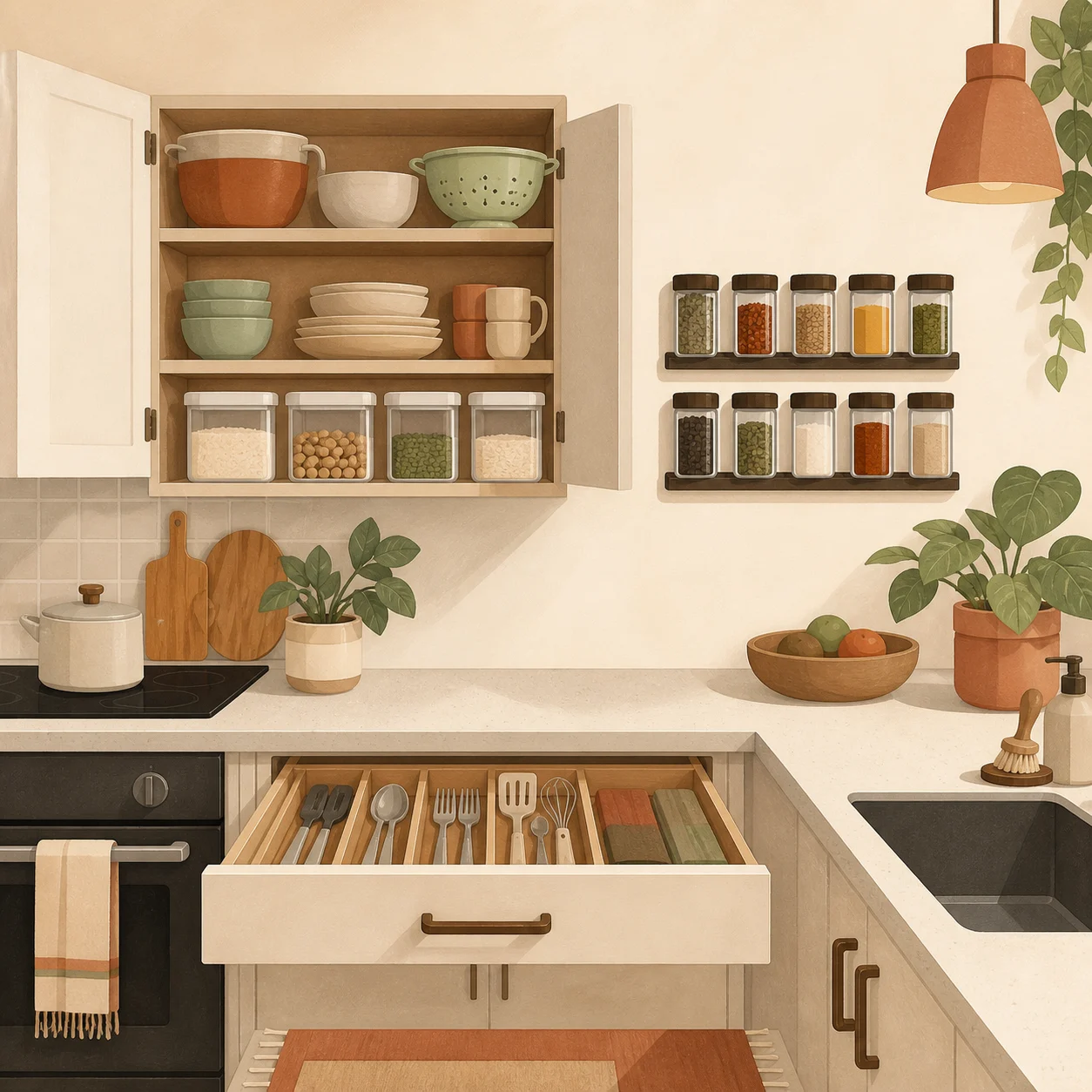
Organizing a Small Kitchen With No Pantry
With no pantry, every cabinet does two jobs badly. The way out is to move the small, frequently used things onto vertical and magnetic surfaces so the cabinets can hold bulk.
The short version
- Spices and utensils are the highest-frequency, lowest-volume items — move them out of cabinets first.
- Drawer dividers add more usable capacity per unit cost than any new shelf.
- Reserve one full cabinet shelf for bulk, and defend it.
The problem, precisely
A pantry-less kitchen forces dry goods, appliances, and daily tools into the same two cabinets. Everything ends up in front of something else, so cooking becomes a sequence of unpacking. The fix is not more storage; it is separating high-frequency small items from low-frequency bulk.
Constraints this guide assumes
- No wall drilling, and often a tiled or laminate splashback.
- Counter space is the scarcest resource, so surface-standing racks are expensive in real terms.
- Appliance panels may or may not be magnetic.
Measurement checklist
Take these before you shop. Write them down in one note and carry it with you.
- 1Drawer interior length, width, and depth to the runner.
- 2Free vertical wall or fridge-side space, in usable rectangles.
- 3Cabinet shelf height, to see whether a shelf riser is possible.
- 4Whether the fridge side panel holds a magnet — test before buying.
- 5Clearance above the counter to the underside of wall cabinets.
The decision, step by step
Audit by frequency, not by category
Sort everything into daily, weekly, and rarely. Daily items must live within one motion of where they are used.
Move small daily items onto vertical surfaces
Spices on a magnetic rack and paper towel off the counter frees a surprising amount of usable counter depth.
Divide the drawers before adding shelves
An expandable divider converts a jumbled drawer into a countable one, which usually removes the need for a new rack entirely.
Give bulk a dedicated shelf
Once dry goods have one home, the rest of the kitchen stops absorbing overflow.
What we'd shop for this
A short list of pieces that suit the plan above.
As an Amazon Associate I earn from qualifying purchases.
Kitchen
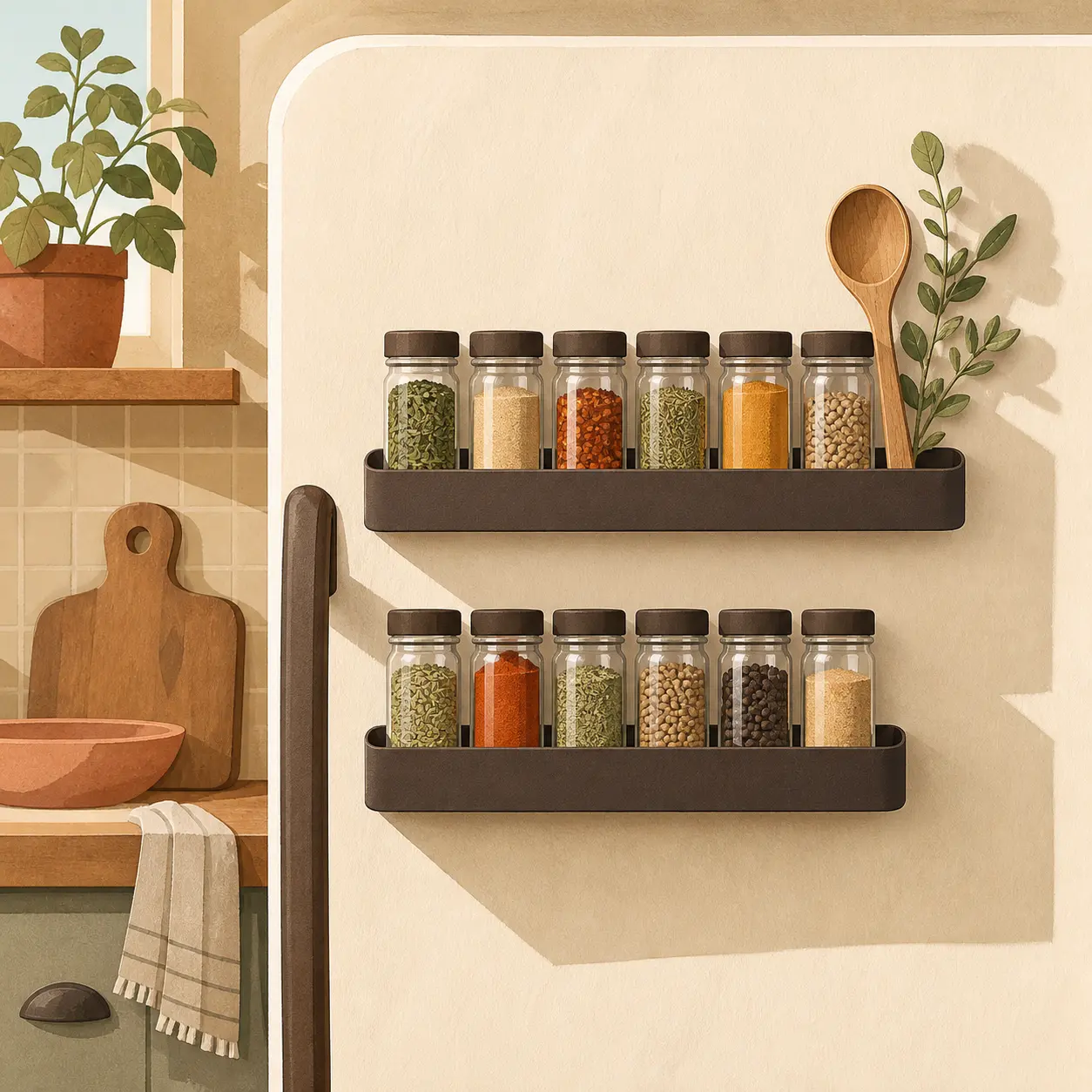
Magnetic Spice Rack
Keeps everyday spices on a magnetic surface so the cabinet stays clear.
Kitchen
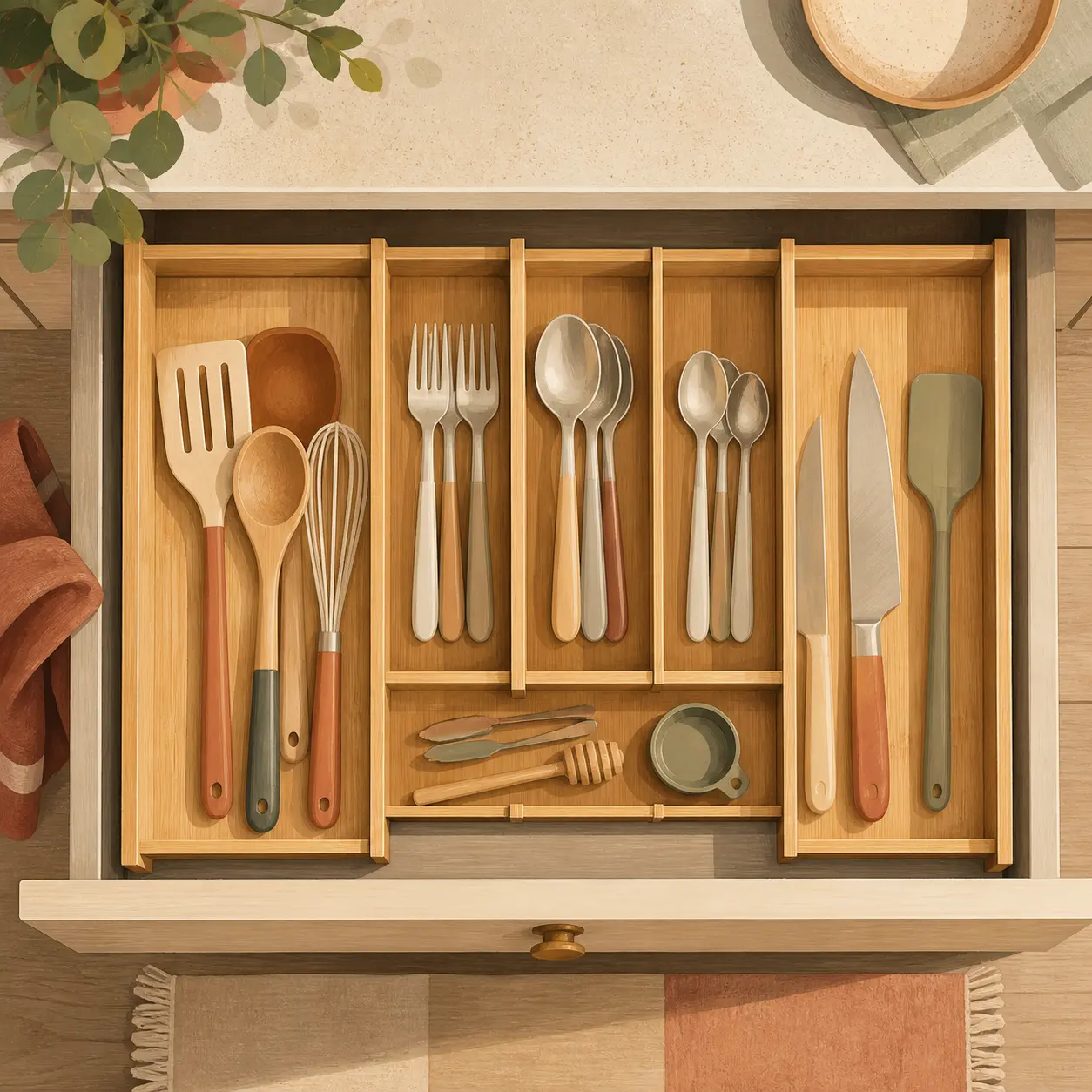
Expandable Utensil Drawer Organizer
Adjusts to the width of a shallow drawer so utensils stop rolling around.
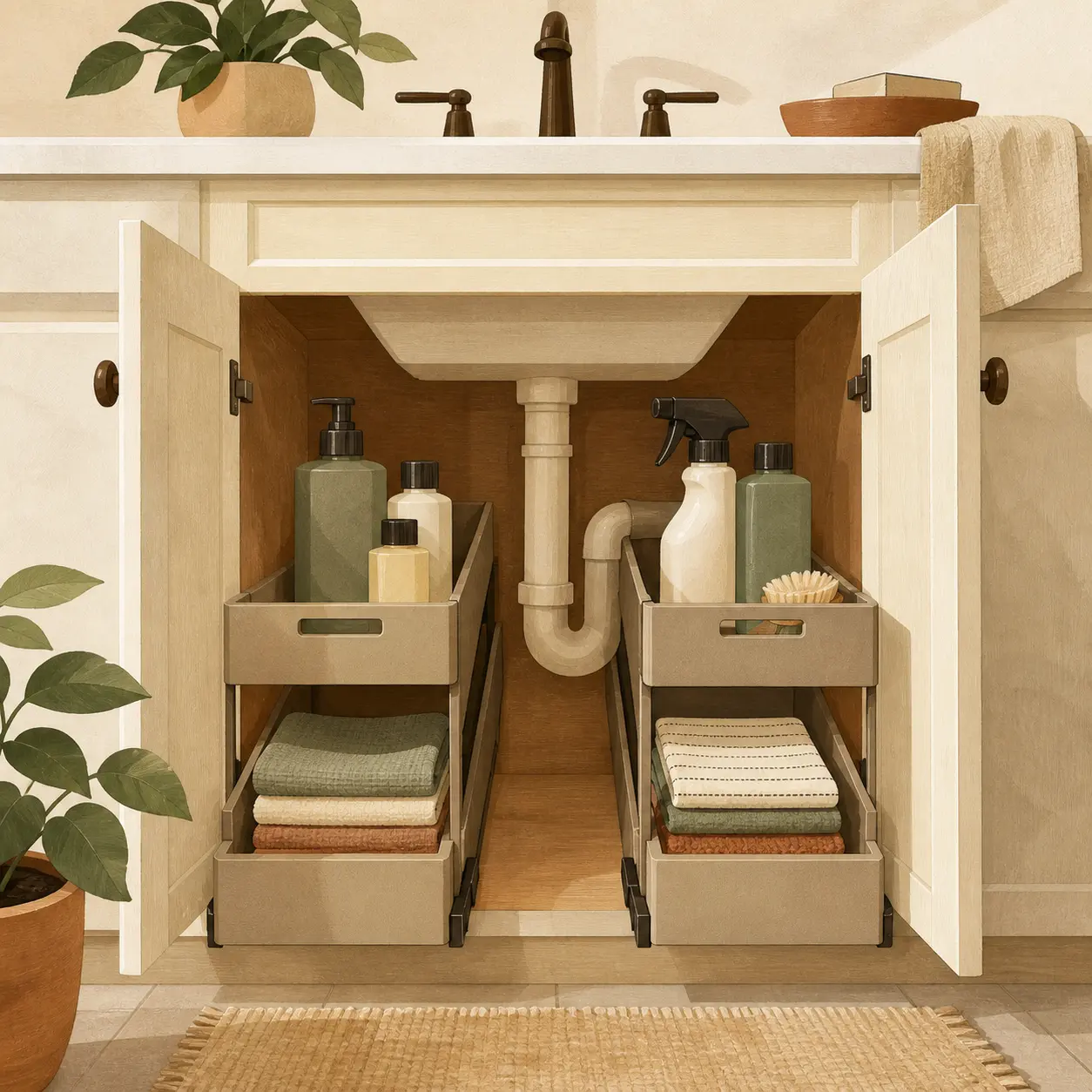
Bathroom
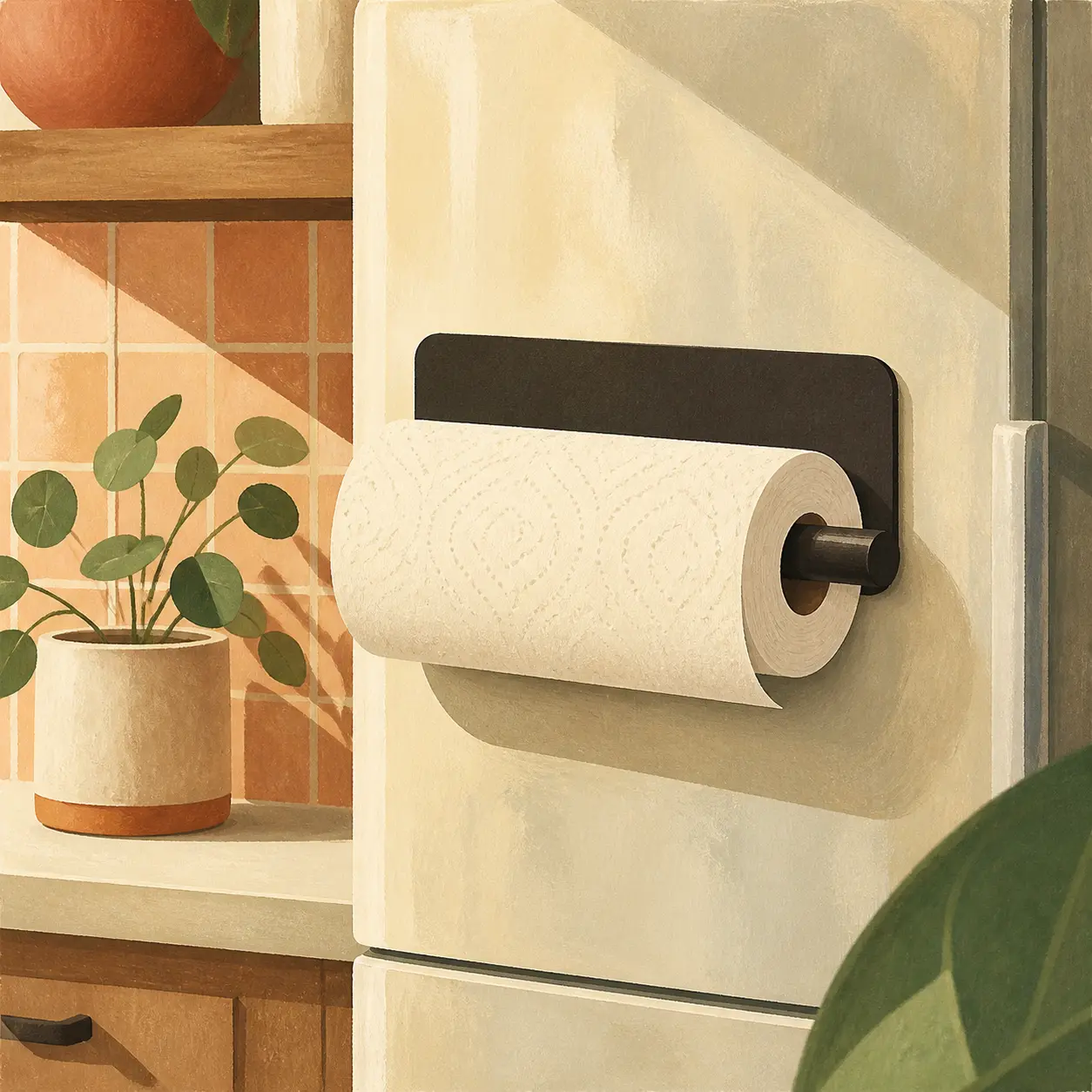
Pull-Out Under-Sink Organizer
Slides out so the back of the cabinet is easy to reach around the pipes.
If that does not fit
- A narrow rolling cart in a gap beside the fridge instead of wall fittings.
- Stackable clear bins on a cabinet shelf if wall surfaces are unusable.
- An over-door caddy inside a cabinet door for flat items.
Common mistakes to avoid
- Buying a counter-standing spice carousel in a kitchen already short on counter.
- Assuming the fridge side is magnetic without testing it.
- Decanting into matching jars before solving where the jars will live.
- Storing rarely used appliances at eye level.
Will this fit your space?
Apartments differ more than product listings suggest. Treat every recommendation here as a starting hypothesis for your own measurements — if a number in your space contradicts a number in this guide, trust your tape measure.
Keep going
More rooms, setups, and guides to read next.