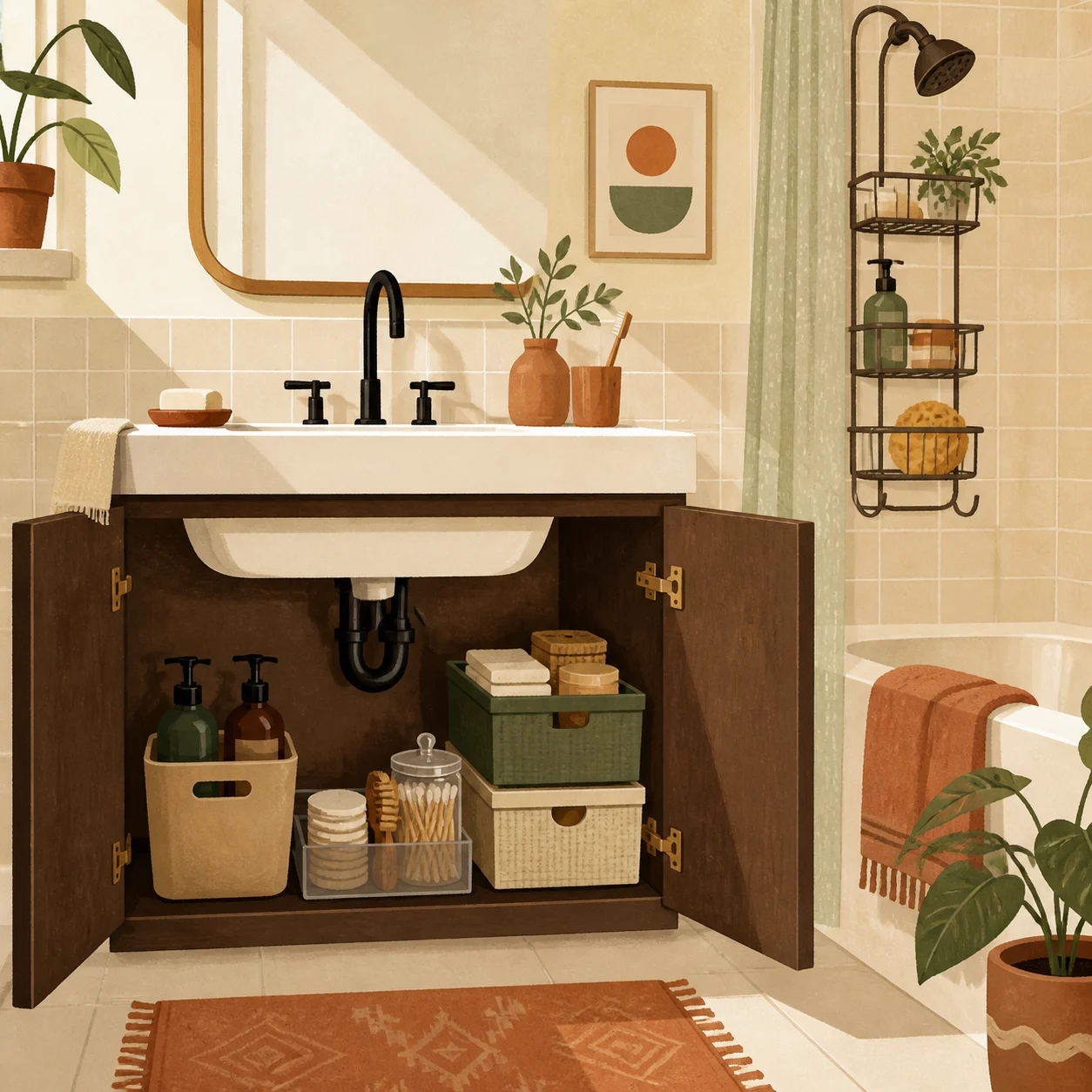
Planning Under-Sink Storage Around the Drain Pipe
The trap pipe is the design brief, not an obstacle to work around later. Three cabinet layouts cover almost every apartment, and each one points to a different shelving type.
The short version
- Centre-trap cabinets need split or expandable frames, not a single shelf.
- Side-trap cabinets suit one pull-out drawer stack on the clear side.
- Never plan storage that blocks a shut-off valve — you will need it in a hurry one day.
The problem, precisely
Under-sink space looks generous and behaves terribly: a pipe through the middle, a raised cabinet lip, a wet floor risk, and a door that only opens so far. Buying a rigid shelf unit first and discovering the pipe second is the standard sequence, and it is the wrong one.
Constraints this guide assumes
- Plumbing cannot be moved in a rental.
- Access matters more than capacity — anything behind the pipe is functionally lost.
- Leaks happen, so nothing porous or absorbent should sit directly on the base.
Measurement checklist
Take these before you shop. Write them down in one note and carry it with you.
- 1Cabinet interior width and depth at floor level.
- 2Horizontal distance from each side wall to the nearest point of the trap.
- 3Height from base to the lowest point of the pipe.
- 4Height of the cabinet lip you must lift items over.
- 5Position of shut-off valves and how much clearance they need to turn.
The decision, step by step
Identify your layout
Centre-trap, side-trap, or rear-trap. Sketch it once; that sketch decides everything that follows.
Reserve the service zone
Mark a no-storage rectangle around valves and joints before allocating any space. This is the single decision that separates a workable cabinet from an annoying one.
Choose access over volume
A pull-out tray that holds less but slides out beats a tall static shelf you have to unpack. Frequency of use should drive height, not size.
Zone by wetness
Keep cloth, paper, and refills off the base. Put cleaning liquids in a contained tray so a slow leak is visible and cheap.
What we'd shop for this
A short list of pieces that suit the plan above.
As an Amazon Associate I earn from qualifying purchases.
Bathroom
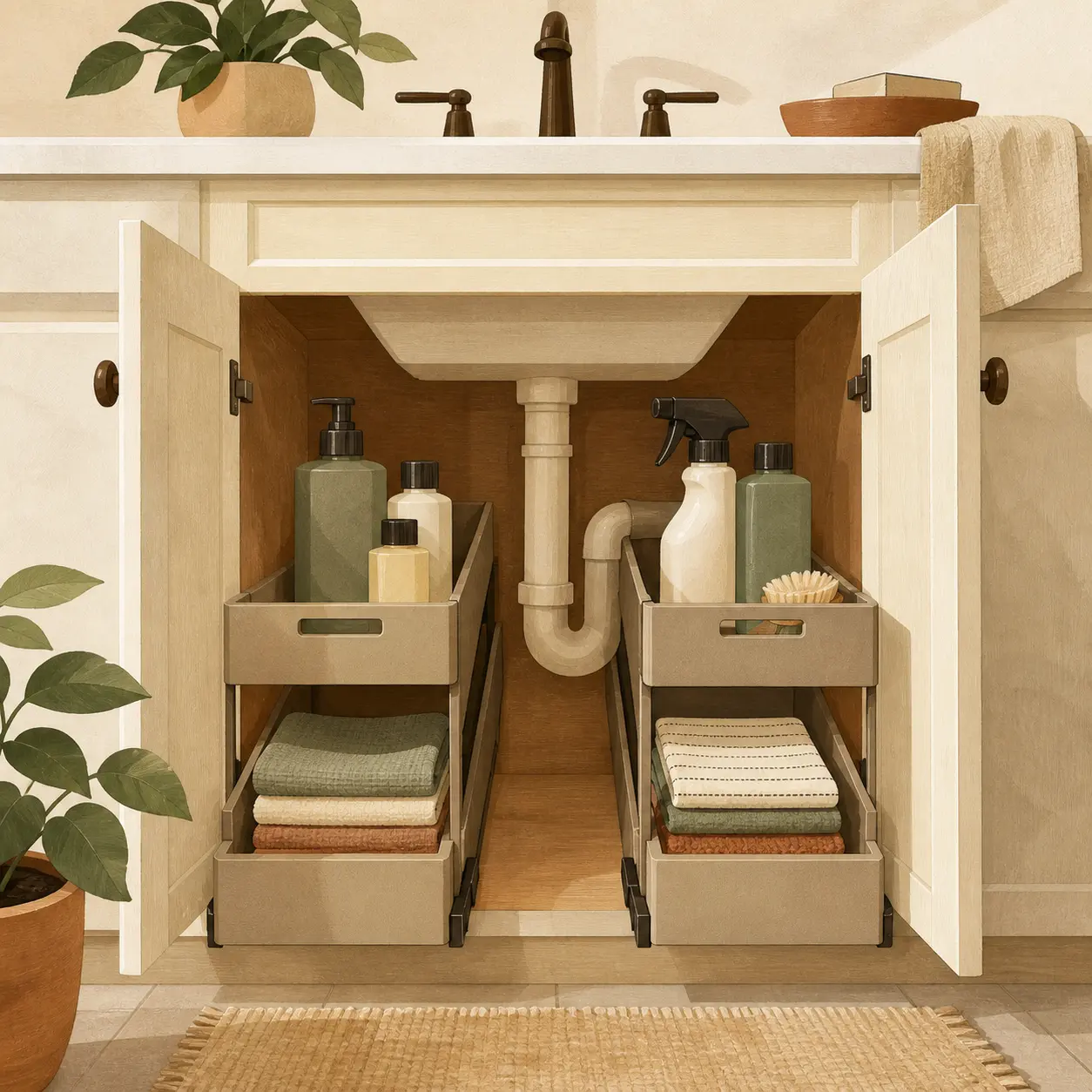
Pull-Out Under-Sink Organizer
Slides out so the back of the cabinet is easy to reach around the pipes.
If that does not fit
- Two narrow stacking bins either side of a centre trap when a frame will not clear.
- A tension rod hung with spray bottles to use the vertical air above the pipe.
- An over-door caddy on the cabinet door for flat, light items.
Common mistakes to avoid
- Buying a fixed-width shelf before measuring the trap offset.
- Storing anything you need weekly behind the pipe.
- Blocking a shut-off valve with a full bin.
- Placing cardboard boxes on a cabinet base that has ever been damp.
Will this fit your space?
Apartments differ more than product listings suggest. Treat every recommendation here as a starting hypothesis for your own measurements — if a number in your space contradicts a number in this guide, trust your tape measure.
Keep going
More rooms, setups, and guides to read next.