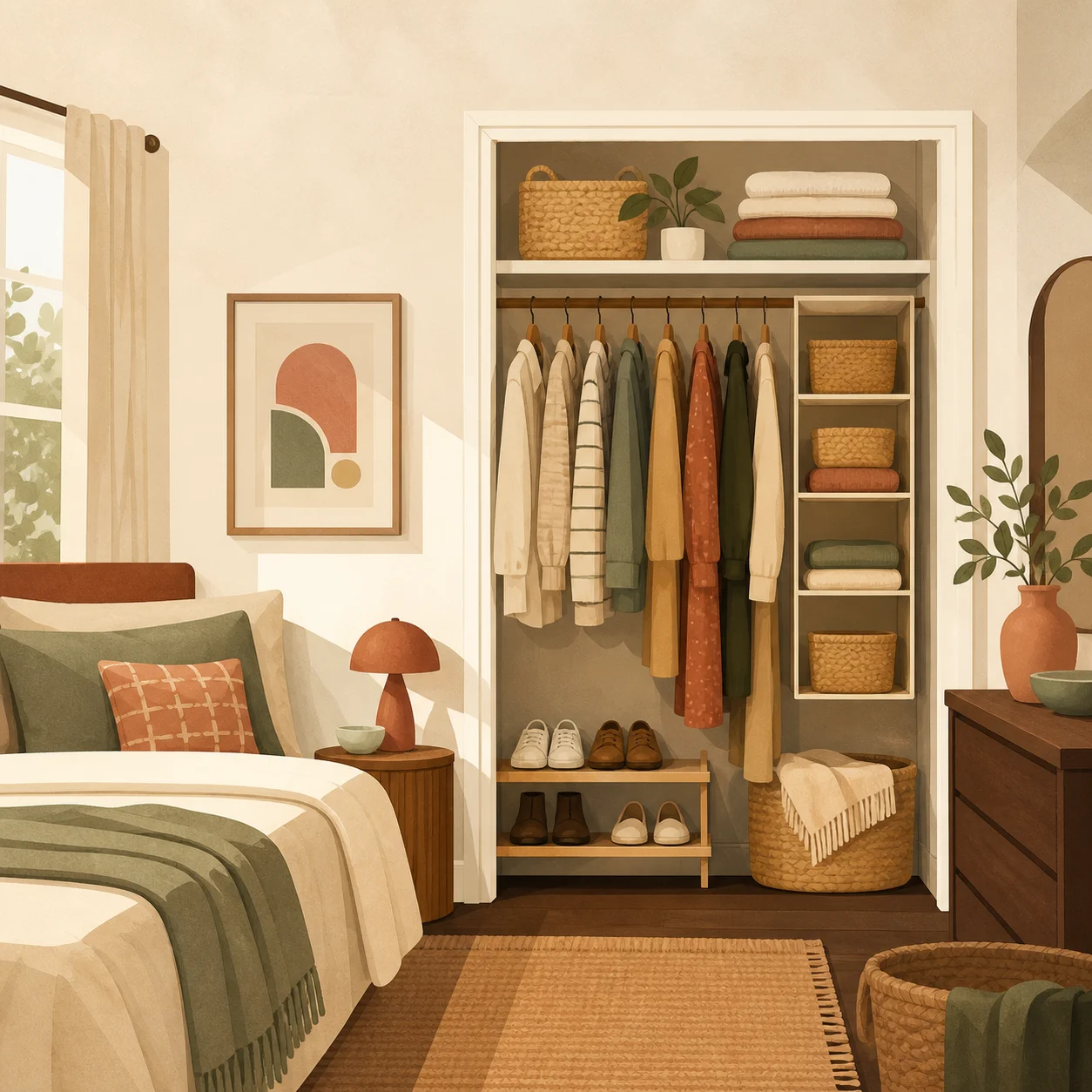
Measure These Six Things Before You Buy Any Organizer
Most returned organizers were the right product in the wrong dimension. This is the six-measurement list we run before any product type earns a card on this site.
The short version
- Rod height and garment drop decide whether a closet doubler is usable at all.
- Depth kills more purchases than width — measure to the obstruction, not the wall.
- Doors, drawers, and valves need swing clearance that the product listing never mentions.
The problem, precisely
Small-space storage fails on dimensions far more often than on quality. A basket that is two centimetres too deep stops a drawer closing; a shelf unit two centimetres too tall will not clear a shower valve. The fix is boring and reliable: measure six things once, write them down, and carry them with you.
Constraints this guide assumes
- Renters cannot move plumbing, rods, or cabinetry to fit a product.
- Listing dimensions are usually external and often omit handles, feet, or hooks.
- Returns of bulky storage are slow and awkward without a car.
Measurement checklist
Take these before you shop. Write them down in one note and carry it with you.
- 1Interior width at the narrowest point, not the opening.
- 2Usable depth measured to the first obstruction (pipe, hinge, radiator, skirting board).
- 3Vertical clearance from the shelf or floor to the next fixed surface.
- 4Door or drawer swing arc — how far the door travels into the space you want to fill.
- 5Diagonal entry clearance: can the assembled unit physically get through the opening?
- 6Load path: what the weight rests on, and whether that surface is fixed to a stud, tile, or plasterboard.
The decision, step by step
Write the six numbers down before you shop
Keep them in one note in centimetres and inches. Every subsequent decision is a comparison against this list, which turns browsing from taste into arithmetic.
Subtract a tolerance
Take 2 cm off width and depth before comparing to any listed dimension. That absorbs handles, moulding, and out-of-square walls, which almost every apartment has.
Decide fixed versus adjustable
If two of your six numbers are awkward, choose an expandable or modular type. If all six are clean, a fixed-frame unit is usually sturdier for the same footprint.
Check the load path last
A product that fits but cannot be supported is still the wrong product. Confirm what carries the weight before you commit to a shape.
What we'd shop for this
A short list of pieces that suit the plan above.
As an Amazon Associate I earn from qualifying purchases.
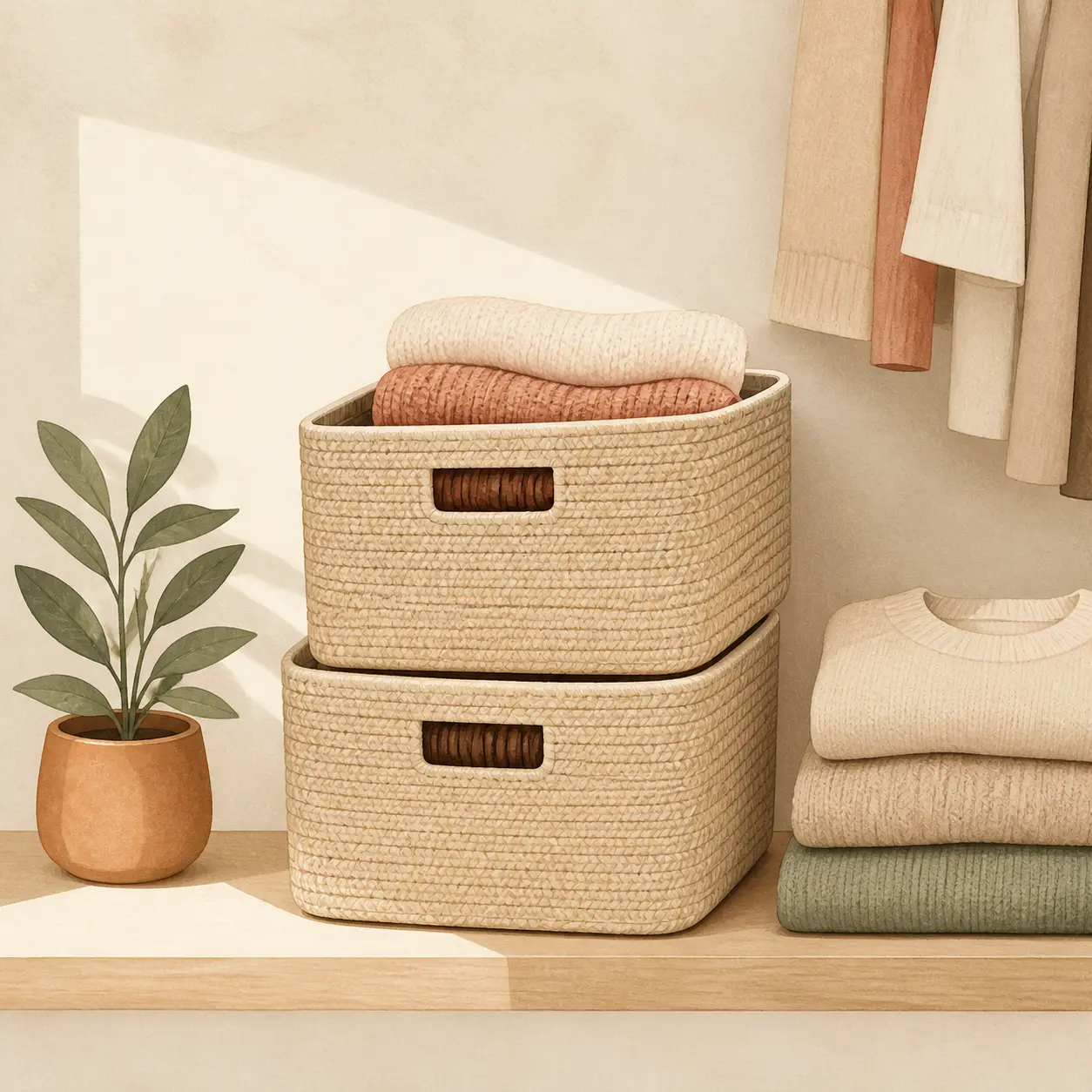
Bedroom & closet
Stackable Closet Basket Set
Turns a deep closet shelf into tidy, lift-out sections for folded clothes.
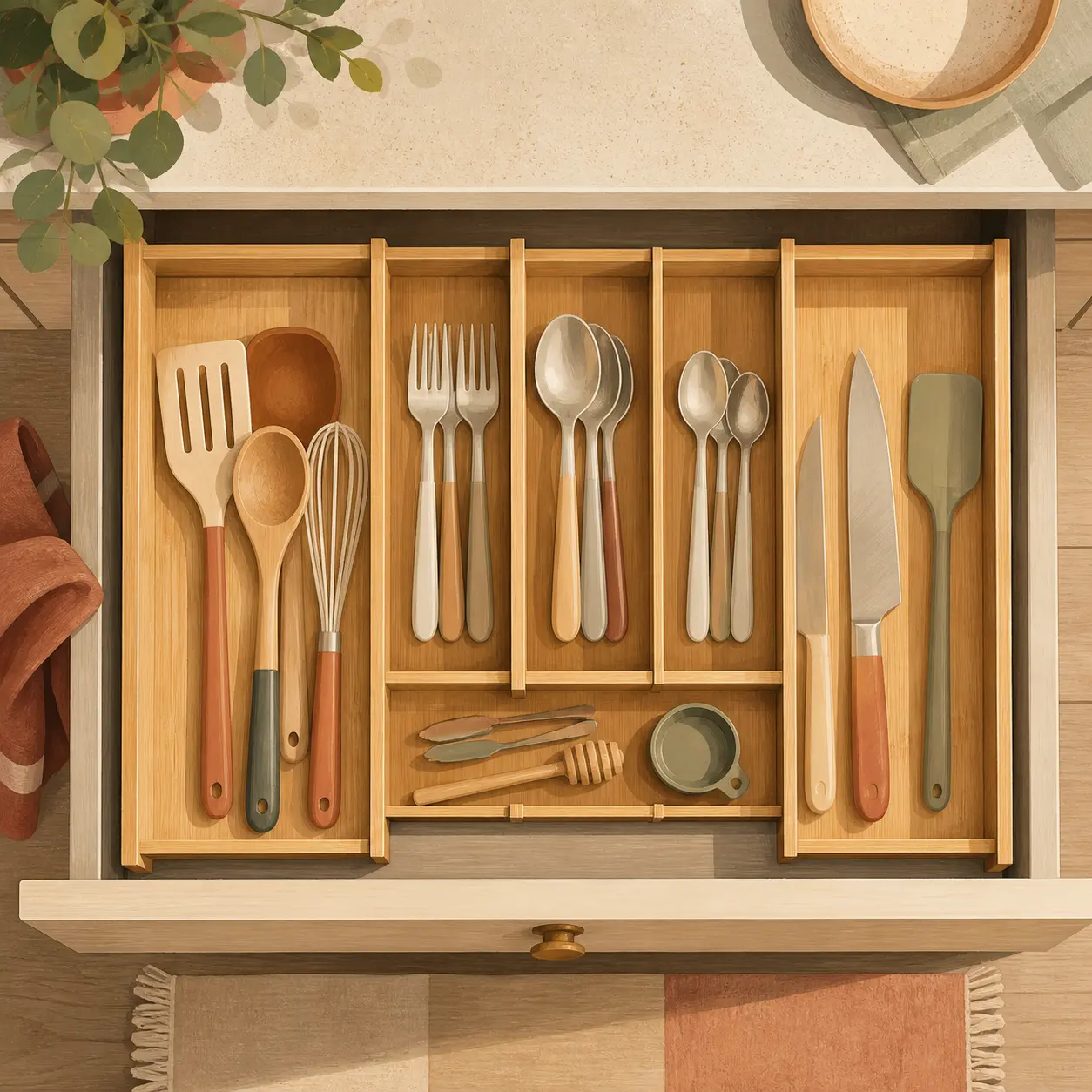
Kitchen
Expandable Utensil Drawer Organizer
Adjusts to the width of a shallow drawer so utensils stop rolling around.
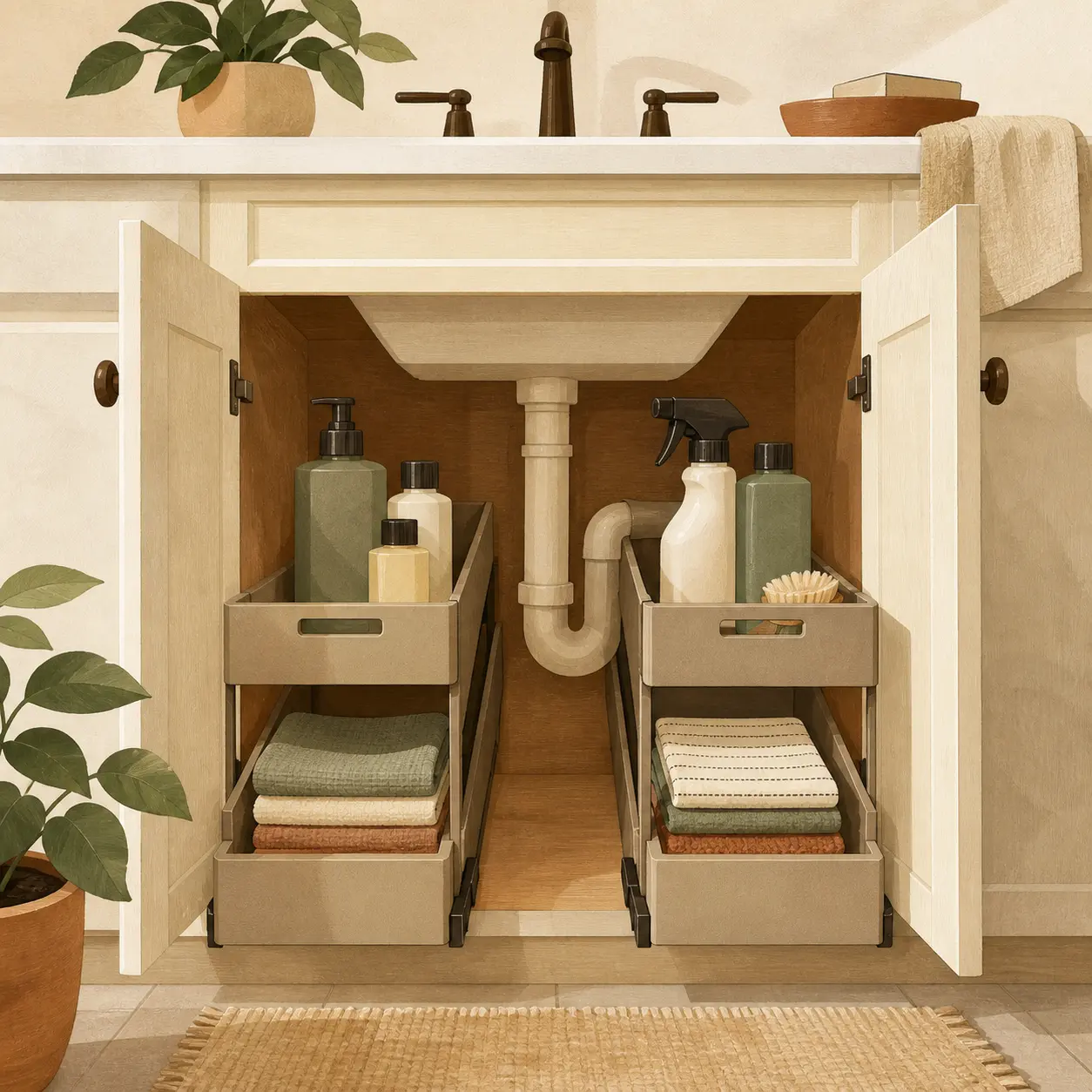
Bathroom
Pull-Out Under-Sink Organizer
Slides out so the back of the cabinet is easy to reach around the pipes.
If that does not fit
- Fabric collapsible bins when the depth number is uncertain and you want forgiveness.
- Modular stacking crates when you expect to move within a year.
- A single deep drawer insert instead of several small ones when width is the tight number.
Common mistakes to avoid
- Measuring the door opening instead of the interior at its narrowest point.
- Trusting a listing's 'fits standard cabinets' claim — standard varies by decade and country.
- Buying a set before testing one unit in the actual space.
- Forgetting that the tape measure must also account for the items going inside.
Will this fit your space?
Apartments differ more than product listings suggest. Treat every recommendation here as a starting hypothesis for your own measurements — if a number in your space contradicts a number in this guide, trust your tape measure.
Keep going
More rooms, setups, and guides to read next.