Small Apartment Closet Organization Without Rebuilding Anything
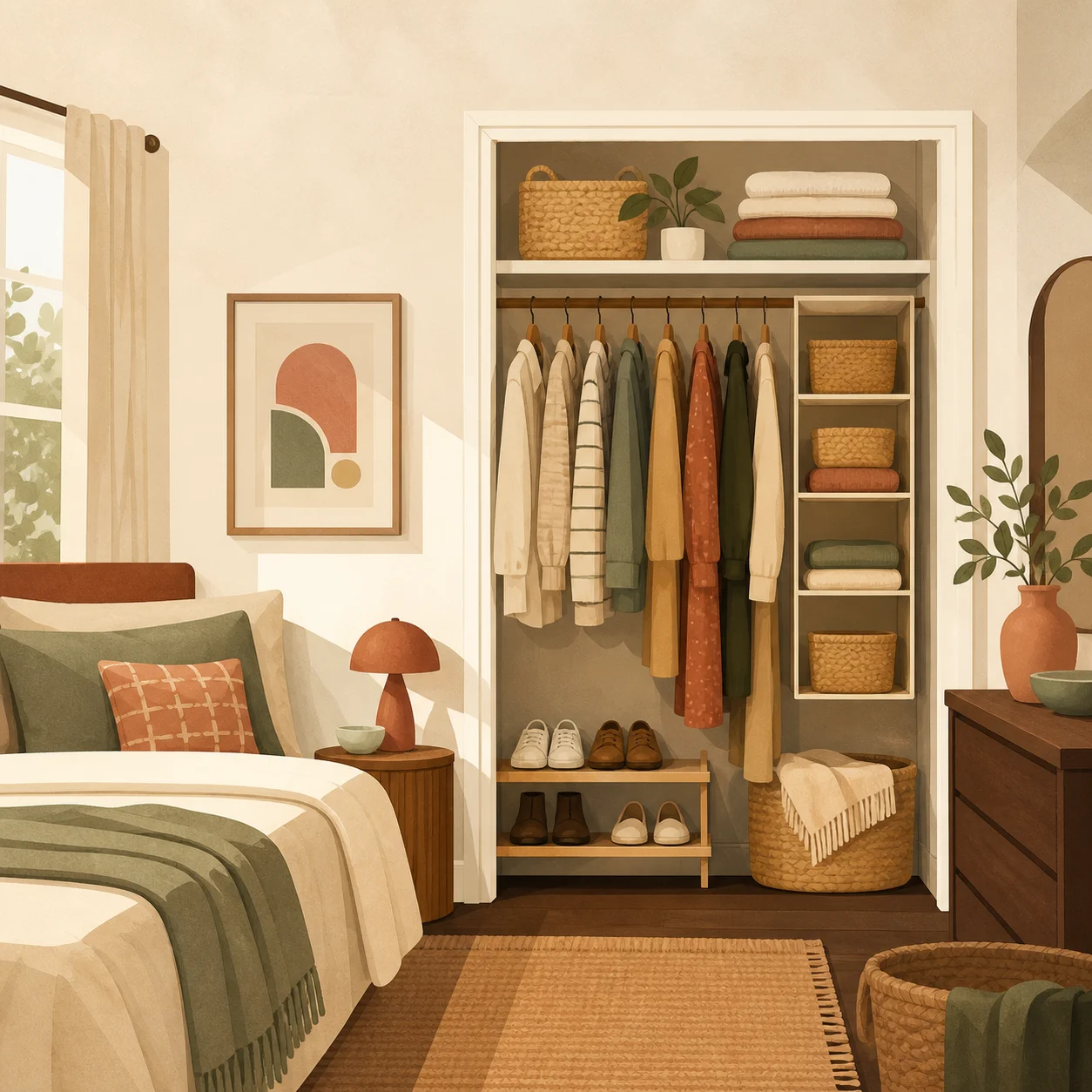
One rod, one shelf, and a door that half-opens. That is the standard rental closet, and it can hold far more than it does — but only if you decide the zones before buying containers.
The short version
- Measure garment drop before assuming a second rod will fit.
- Dead air above the shelf is the largest unused volume in most closets.
- Containers should be chosen after zoning, never before.
The problem, precisely
Rental closets are shallow, single-rod, and lit badly. The instinct is to buy matching boxes; the result is a closet that looks tidier and holds the same amount. Capacity comes from reallocating vertical space, not from prettier containers.
Constraints this guide assumes
- No new fixings into the closet structure in most leases.
- Depth is often under 55 cm, so anything front-to-back is a compromise.
- The door restricts what can be reached from the sides.
Measurement checklist
Take these before you shop. Write them down in one note and carry it with you.
- 1Rod height from floor, and clearance from rod to shelf above.
- 2Longest garment drop, measured on the hanger.
- 3Interior depth at the narrowest point, including the door frame.
- 4Shelf-to-ceiling height for the dead-air zone.
- 5Door type and swing — bifold doors block the outer thirds.
The decision, step by step
Split the closet into three vertical zones
Hanging, folded, and archive. Assign the archive zone to the hardest-to-reach height and never let daily items live there.
Test whether a second rod is real
Subtract your longest short-garment drop twice from rod height. If the answer is negative, a doubler will not work and a hanging shelf tower is the better use of the same volume.
Convert the shelf into two levels
Stackable baskets on the top shelf reclaim the dead air. Use open-front baskets for anything accessed weekly.
Move shoes out of the floor zone
Floor clutter is what makes a closet feel full. A low rack or over-door pockets frees the visual base of the closet, which changes how the whole room reads.
What we'd shop for this
A short list of pieces that suit the plan above.
As an Amazon Associate I earn from qualifying purchases.
Bedroom & closet
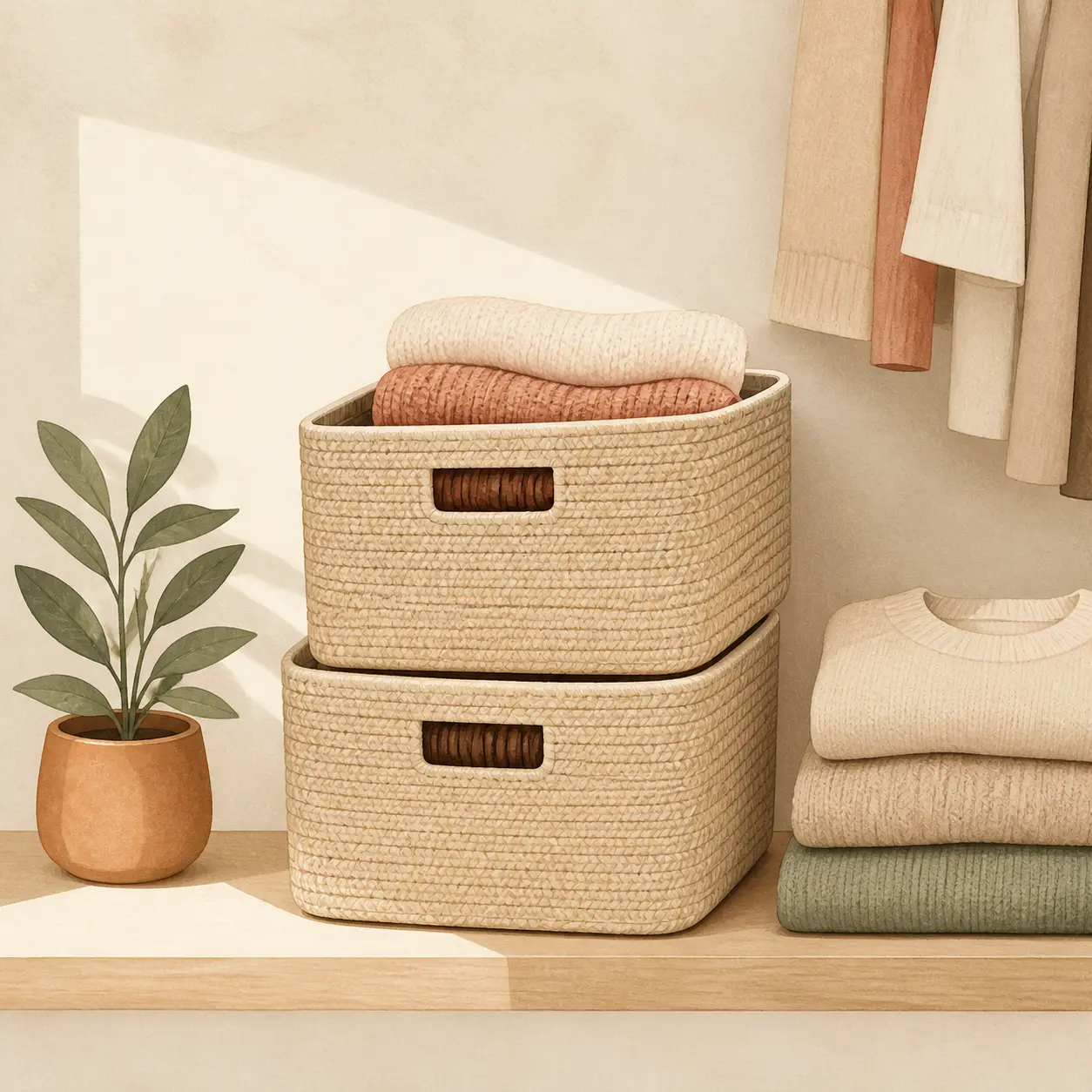
Stackable Closet Basket Set
Turns a deep closet shelf into tidy, lift-out sections for folded clothes.
Bedroom & closet
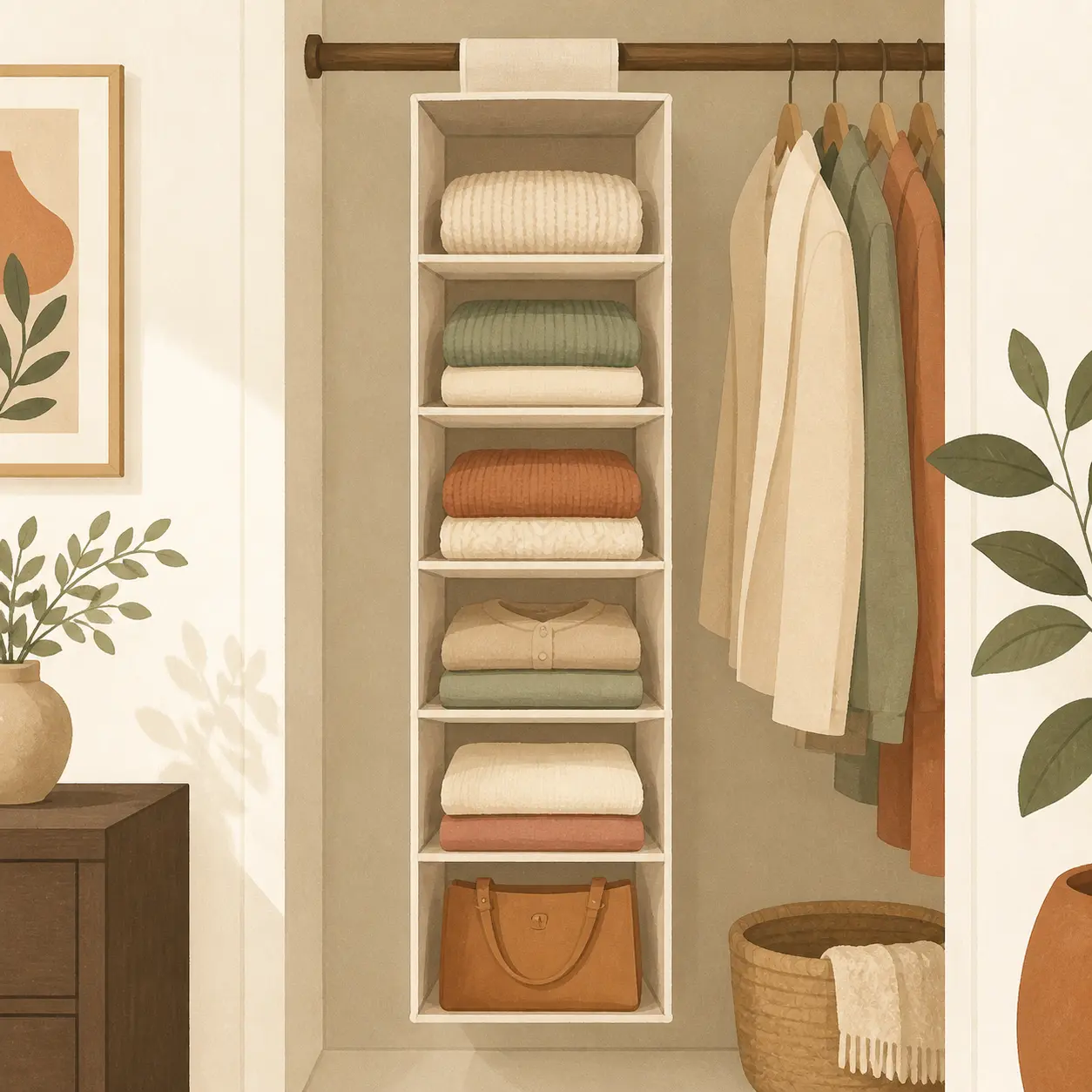
Six-Shelf Hanging Closet Organizer
Hangs from the rod to give sweaters, bags and folded stacks their own shelves.
Bedroom & closet
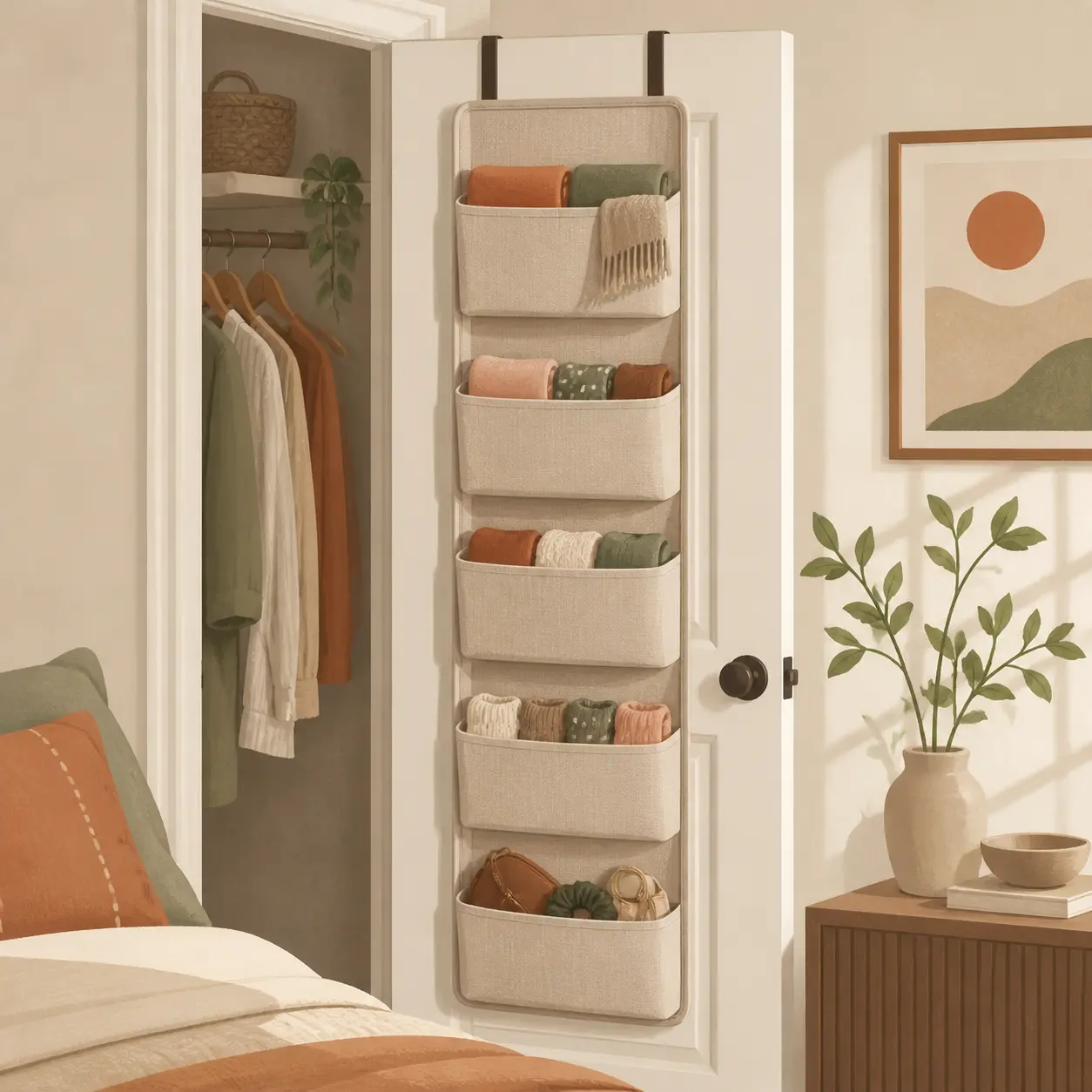
Over-Door Five-Shelf Organizer
Adds five shallow shelves to the back of a closet door for everyday essentials.
Bedroom & closet
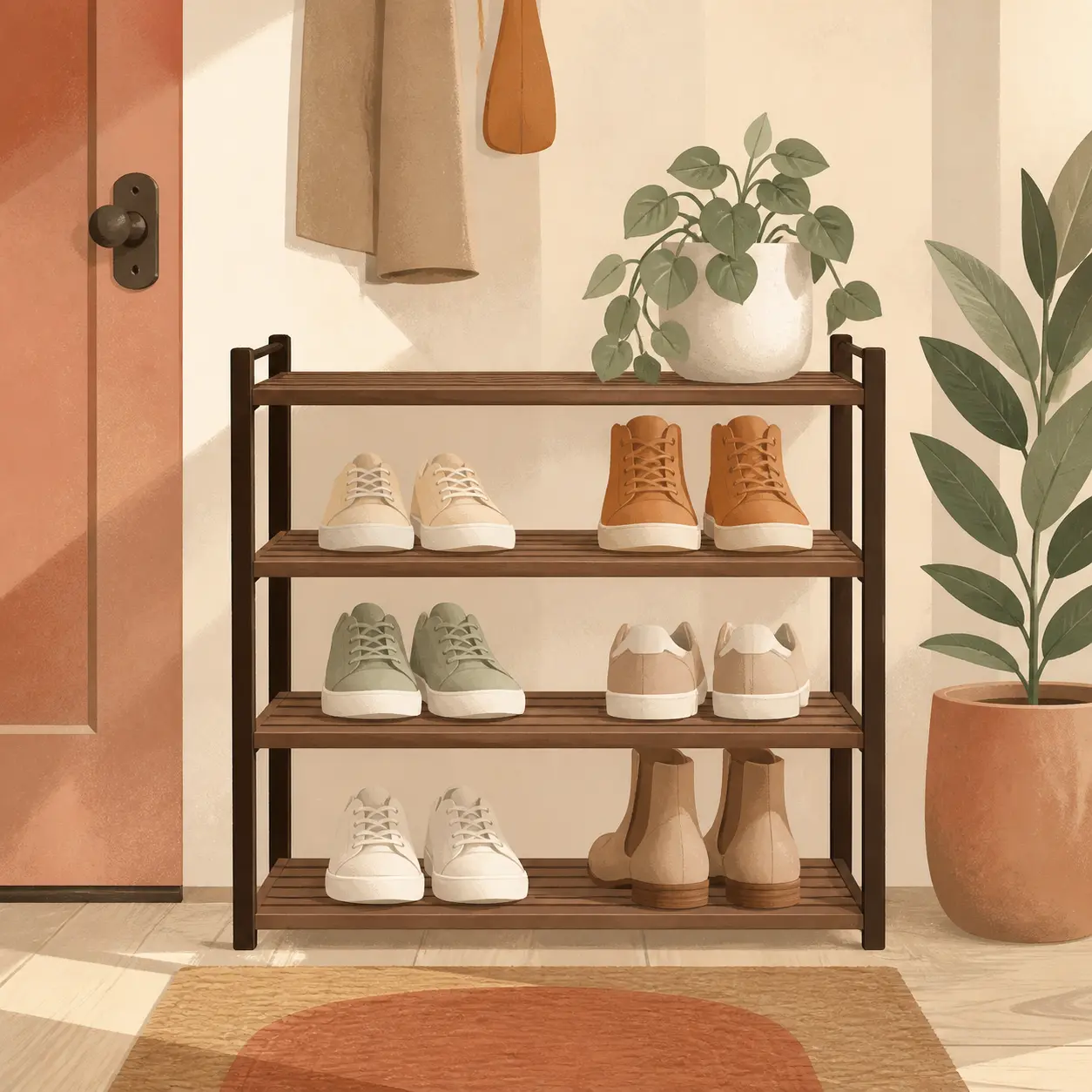
Three-Tier Shoe Rack
Keeps sneakers and boots stacked upright instead of scattered on the floor.
If that does not fit
- Under-bed containers when closet depth is genuinely unworkable.
- A slim freestanding rail beside the closet if the room has a spare wall.
- Vacuum bags for seasonal bulk instead of a taller basket stack.
Common mistakes to avoid
- Buying uniform boxes before deciding what goes where.
- Filling the top shelf with items used weekly.
- Choosing a hanging organizer wider than the usable rod section.
- Ignoring the bifold door's blocked corners when planning the floor.
Will this fit your space?
Apartments differ more than product listings suggest. Treat every recommendation here as a starting hypothesis for your own measurements — if a number in your space contradicts a number in this guide, trust your tape measure.
Keep going
More rooms, setups, and guides to read next.