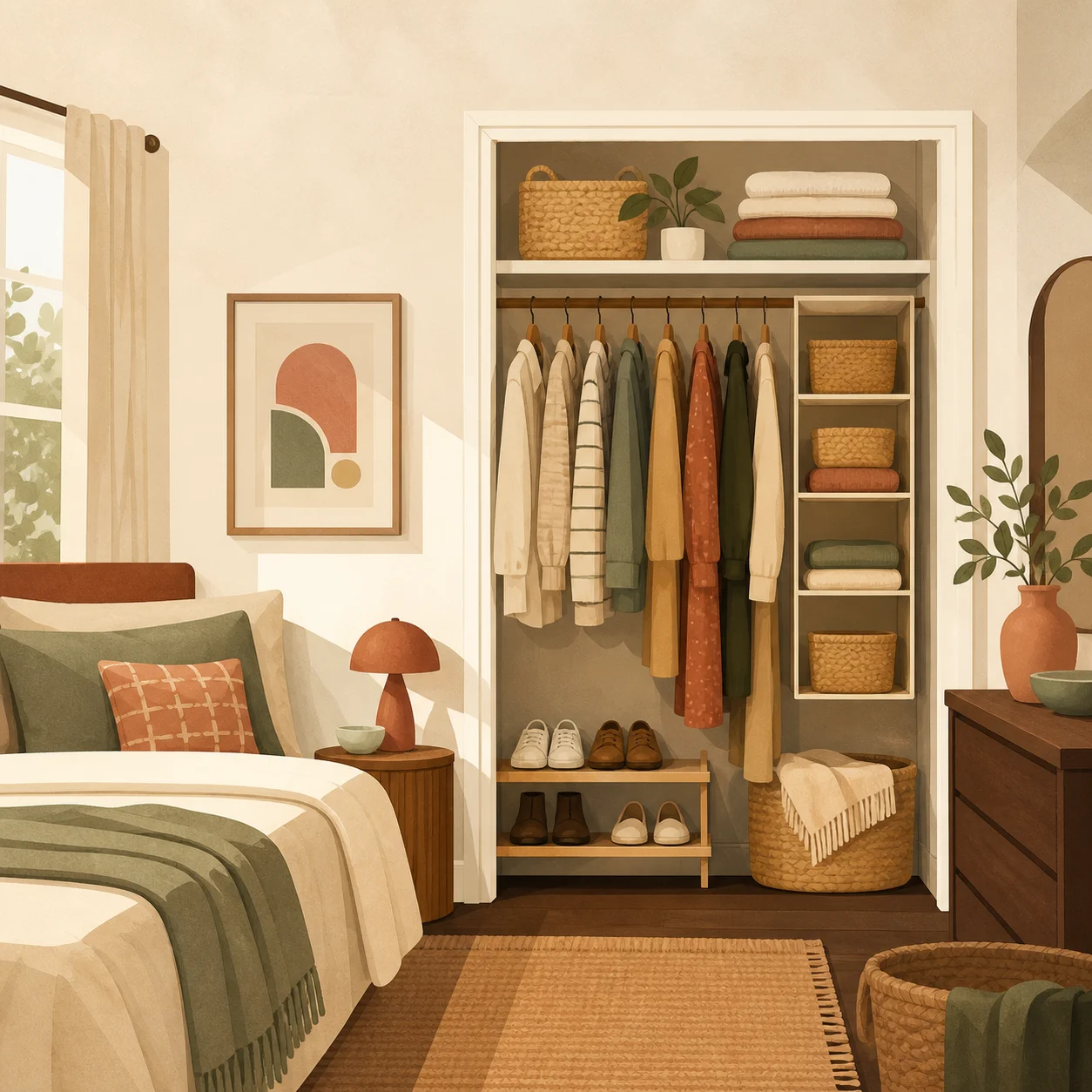
Shoe Storage for Apartments Without a Hallway
Shoes are the clutter people see first because they sit at eye level when you walk in. Solving them is mostly a question of where the pile currently forms.
The short version
- Count pairs in active rotation, not total pairs — they need different storage.
- Depth is the binding constraint behind a door; height is the constraint in a closet.
- Open racks beat closed boxes for anything worn more than twice a week.
The problem, precisely
Without an entry hall, shoes accumulate wherever the door swings. Tall shoe cabinets rarely fit, and stacking boxes makes the daily pairs harder to reach than the pile they replaced.
Constraints this guide assumes
- Behind-door depth is often under 25 cm before the door hits.
- Wet or dirty outdoor shoes should not be stored on carpet.
- Tall boots break the assumptions of most tiered racks.
Measurement checklist
Take these before you shop. Write them down in one note and carry it with you.
- 1Depth from wall to the door's open position at its closest point.
- 2Width of clear floor beside the door.
- 3Tallest pair's height, measured upright.
- 4Closet floor depth and whether the door blocks the corners.
- 5Number of pairs in weekly rotation.
The decision, step by step
Split rotation from storage
Active pairs go on an open rack in reach; the rest can go high, under a bed, or in a closed container.
Pick the surface based on wetness
If shoes come in wet, choose a wipeable tier with a lip and keep it off carpet.
Fit the tallest pair first
Set tier spacing around boots, then fill the remaining tiers with flatter pairs. The reverse order always ends in one homeless pair.
Keep the floor visible
A rack that lifts shoes off the floor makes a small entry read as tidy even when it is full.
What we'd shop for this
A short list of pieces that suit the plan above.
As an Amazon Associate I earn from qualifying purchases.
Bedroom & closet
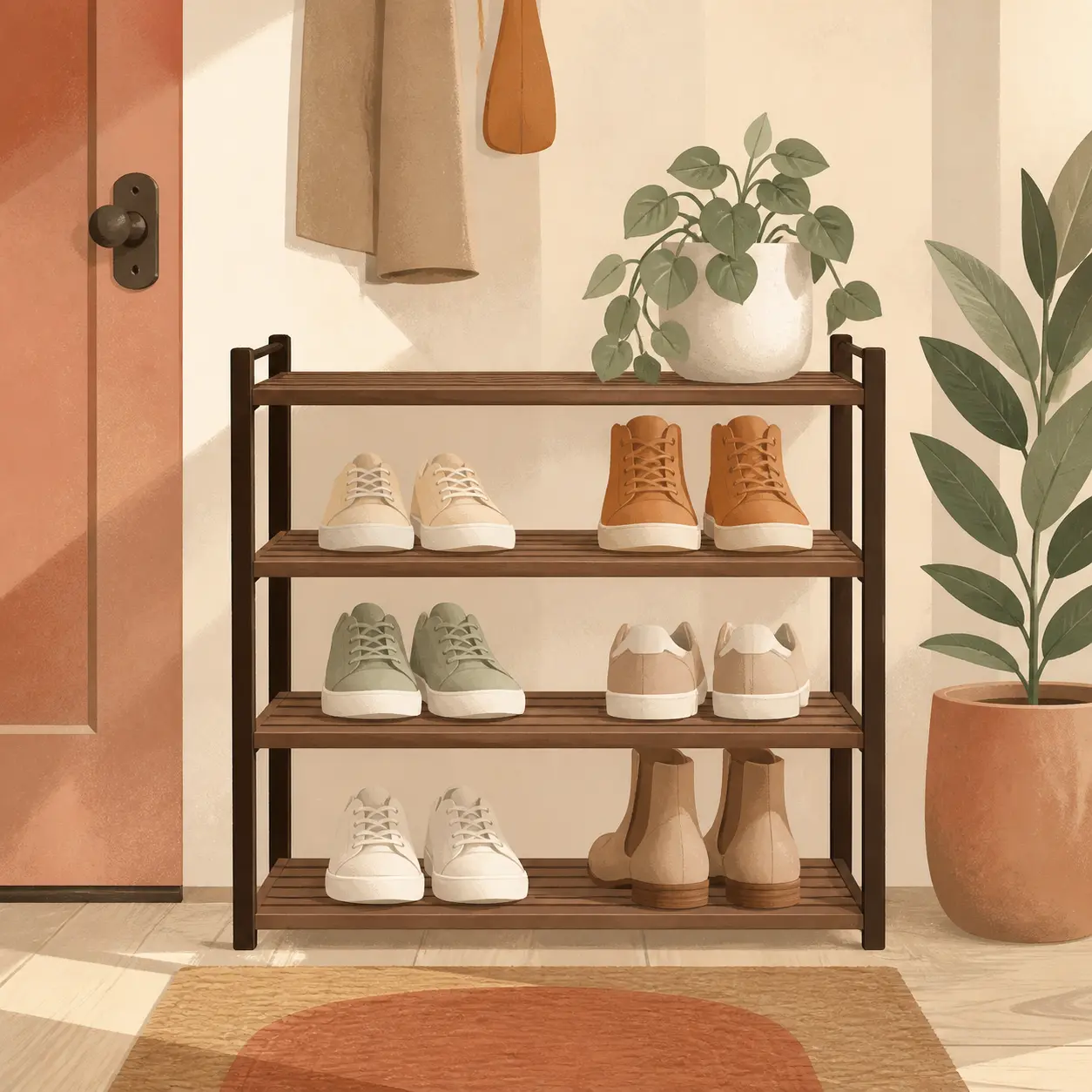
Three-Tier Shoe Rack
Keeps sneakers and boots stacked upright instead of scattered on the floor.
Bedroom & closet
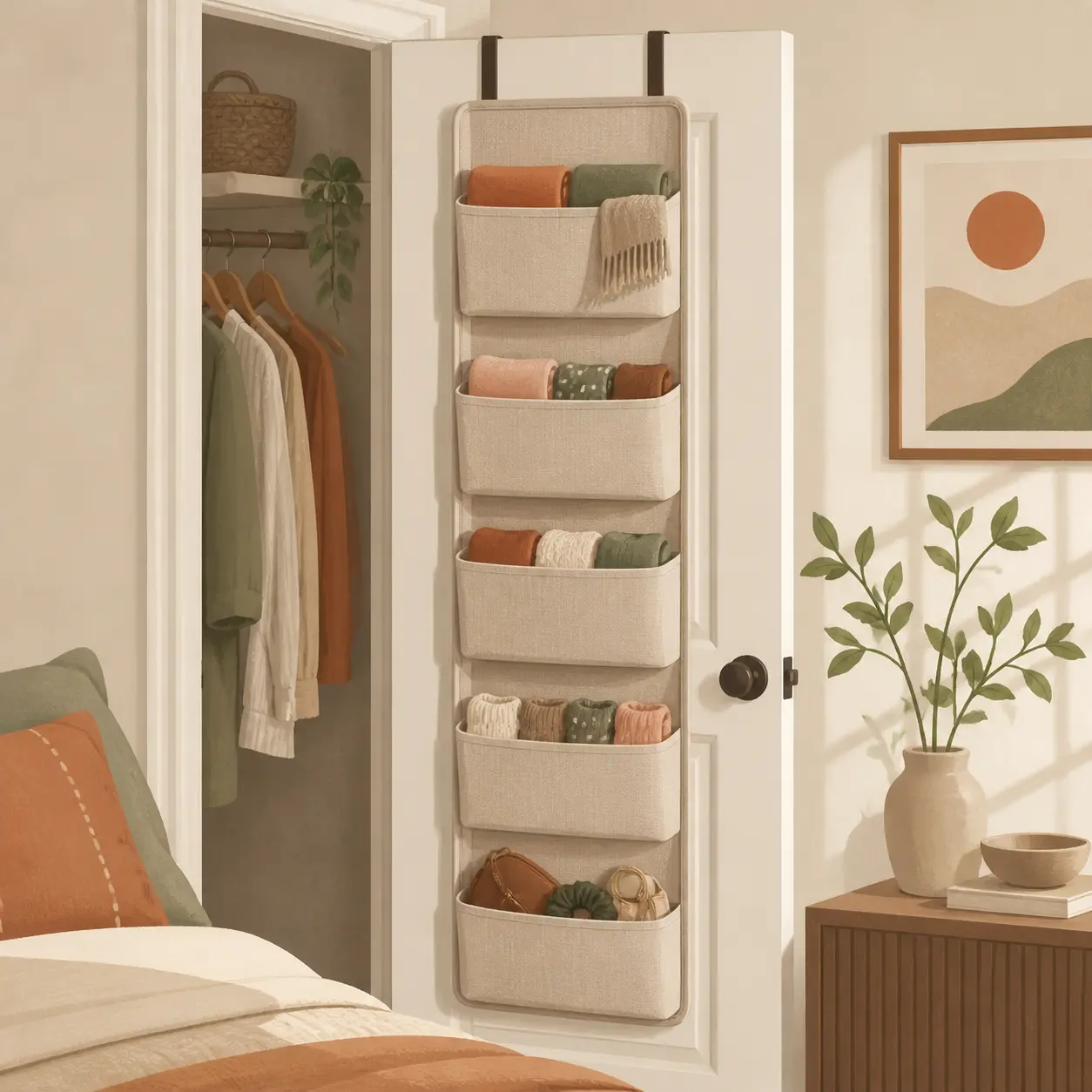
Over-Door Five-Shelf Organizer
Adds five shallow shelves to the back of a closet door for everyday essentials.
Bedroom & closet
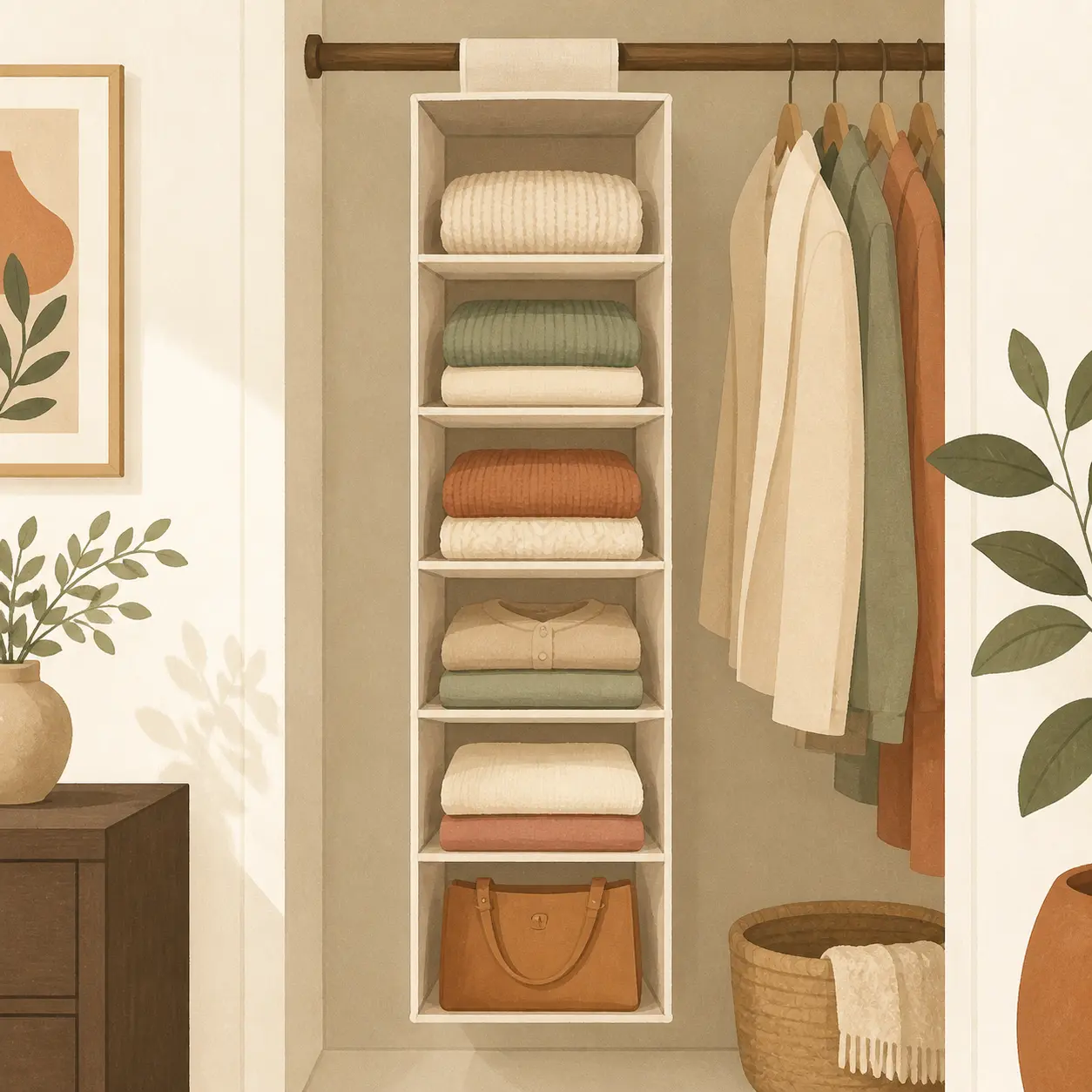
Six-Shelf Hanging Closet Organizer
Hangs from the rod to give sweaters, bags and folded stacks their own shelves.
If that does not fit
- Under-bed shoe trays when floor space near the door is zero.
- A bench with cubbies if the entry can spare 40 cm of depth.
- Hanging fabric pockets for flats and sandals only.
Common mistakes to avoid
- Choosing a rack sized for average shoes when you own boots.
- Putting daily pairs into lidded boxes.
- Blocking the door swing by a few centimetres — enough to be irritating every single day.
- Storing damp shoes inside a closed closet.
Will this fit your space?
Apartments differ more than product listings suggest. Treat every recommendation here as a starting hypothesis for your own measurements — if a number in your space contradicts a number in this guide, trust your tape measure.
Keep going
More rooms, setups, and guides to read next.