
No-Drill Storage That Actually Holds: What Fails and Why
Adhesive, tension, magnetic, and over-door mounts each fail in a predictable way. Once you know the failure mode, choosing between them stops being guesswork.
The short version
- Adhesive fails in shear over time — hang light, hang low, hang vertical loads.
- Tension fittings lose grip on textured, glossy, or freshly painted surfaces.
- Over-door hardware transfers load into the hinge, which is the real weight limit.
The problem, precisely
A deposit-safe apartment rules out most conventional mounting, so renters reach for adhesive strips and tension rods and then blame the product when a shelf lands in the bath at 2am. The products are usually fine; they were asked to carry the wrong kind of load.
Constraints this guide assumes
- No permanent holes, and often no visible residue on paint or tile.
- Humid rooms degrade adhesive faster than dry ones.
- Textured plaster, wallpaper, and rental-grade paint all reduce grip.
Measurement checklist
Take these before you shop. Write them down in one note and carry it with you.
- 1Surface type at the exact mounting spot — tile, gloss paint, matte paint, wallpaper, laminate.
- 2Door thickness including any moulding, for over-door hooks.
- 3The gap between door top and frame when the door is closed.
- 4Distance between two facing walls for a tension fitting, measured at three heights.
- 5Estimated wet weight for anything in a bathroom, not dry weight.
The decision, step by step
Classify the load direction
Downward pull along the wall is shear; pulling straight out is tension. Adhesive tolerates shear far better than tension, which is why a hook works and a floating shelf does not.
Match the method to the surface
Smooth non-porous surfaces suit adhesive. Textured walls suit tension between two solid faces. Steel surfaces suit magnetic fittings, which are the only genuinely reversible option.
Prepare the surface properly
Clean with isopropyl alcohol, not household spray — surfactant residue is the most common cause of an adhesive mount letting go a week later.
Load in stages
Cure the adhesive unloaded for the full stated time, then add half the intended weight for a day before committing.
What we'd shop for this
A short list of pieces that suit the plan above.
As an Amazon Associate I earn from qualifying purchases.
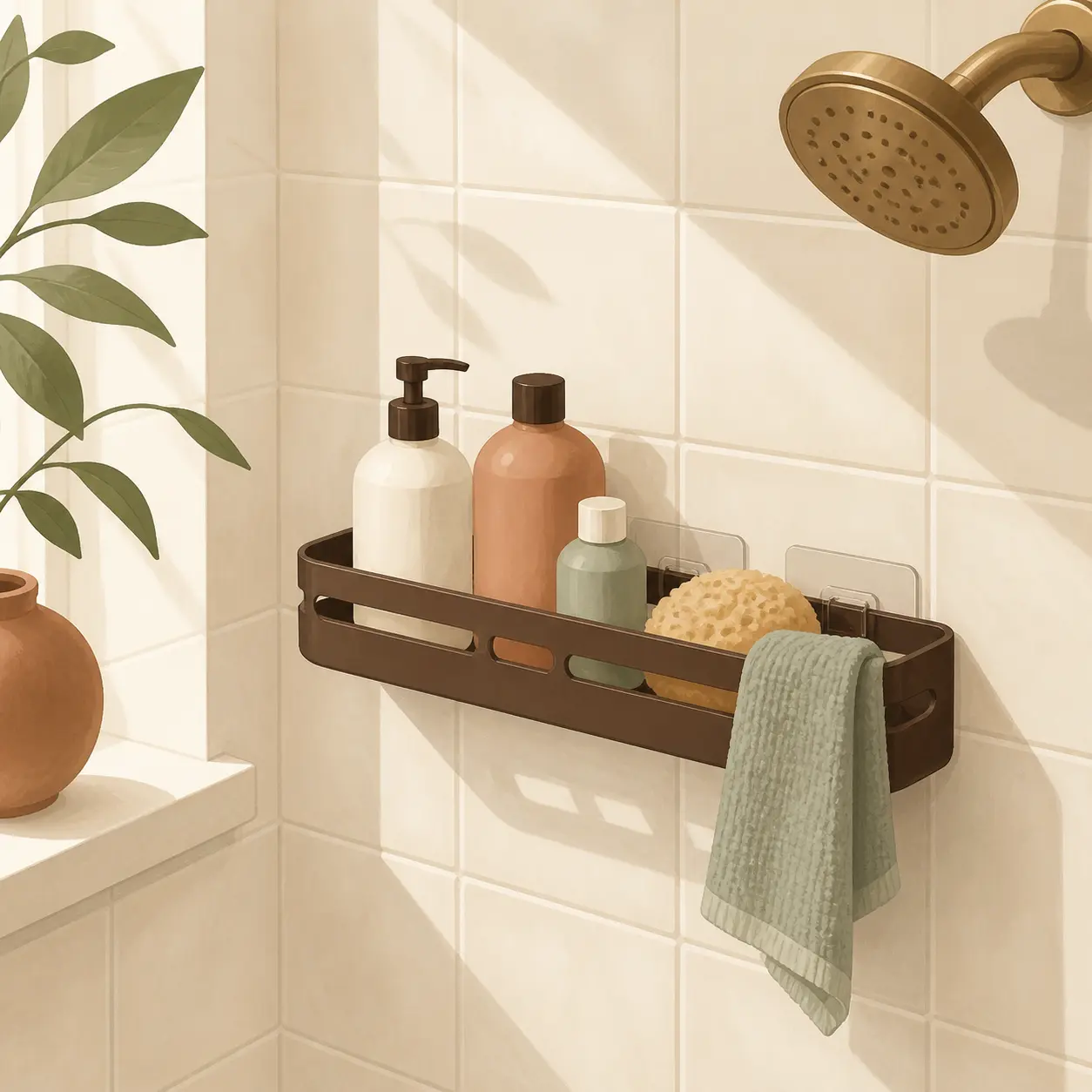
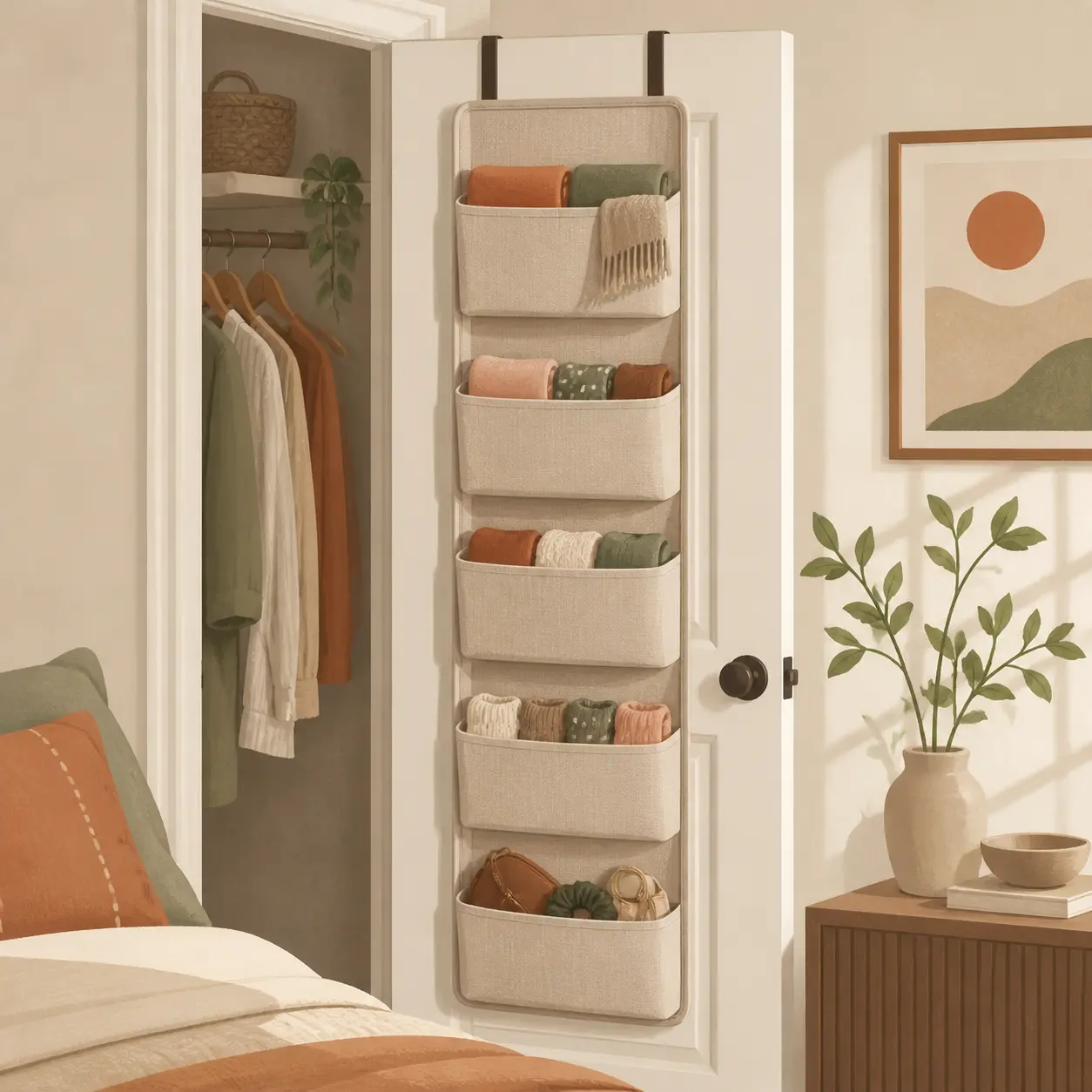
Bedroom & closet
Over-Door Five-Shelf Organizer
Adds five shallow shelves to the back of a closet door for everyday essentials.
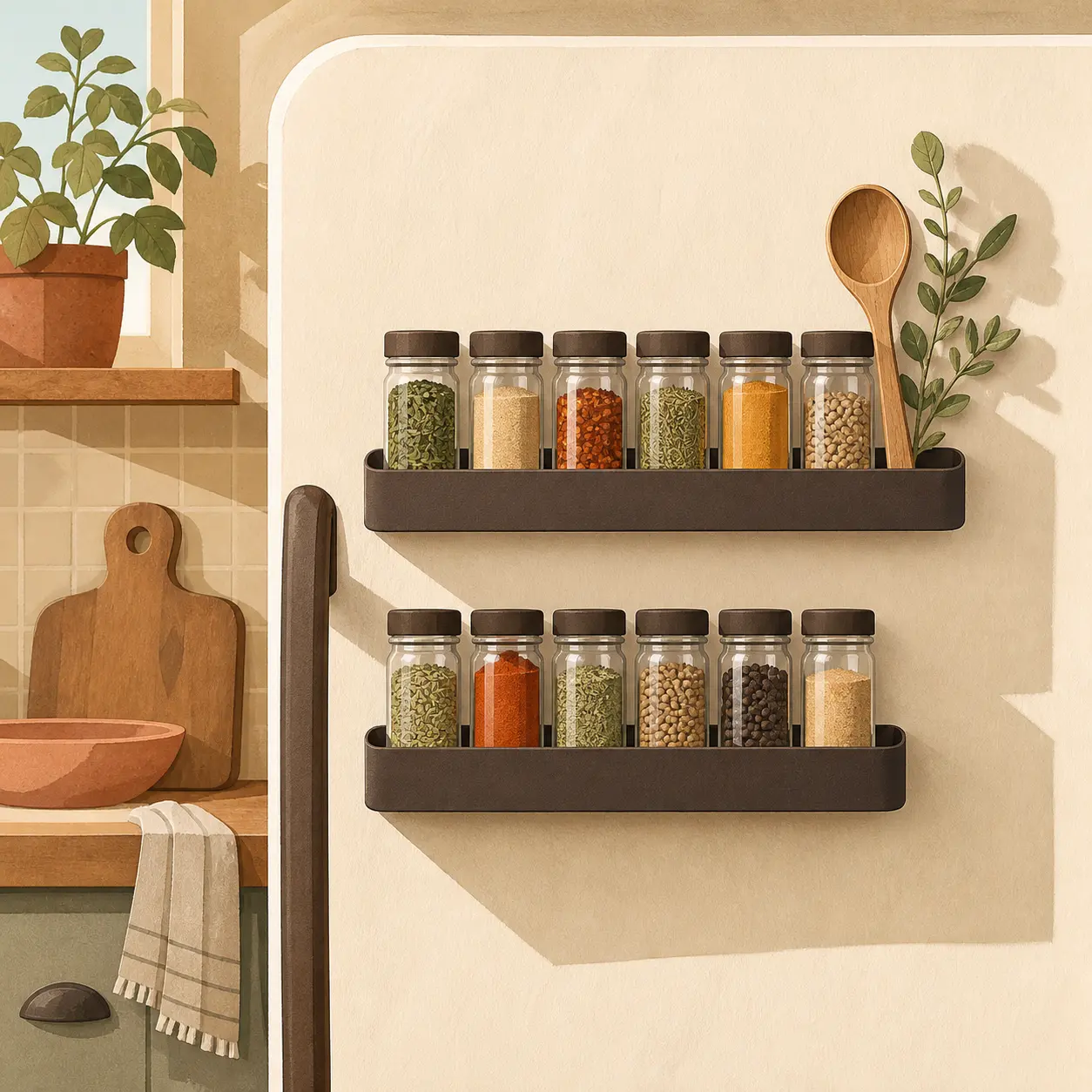
Kitchen
Magnetic Spice Rack
Keeps everyday spices on a magnetic surface so the cabinet stays clear.
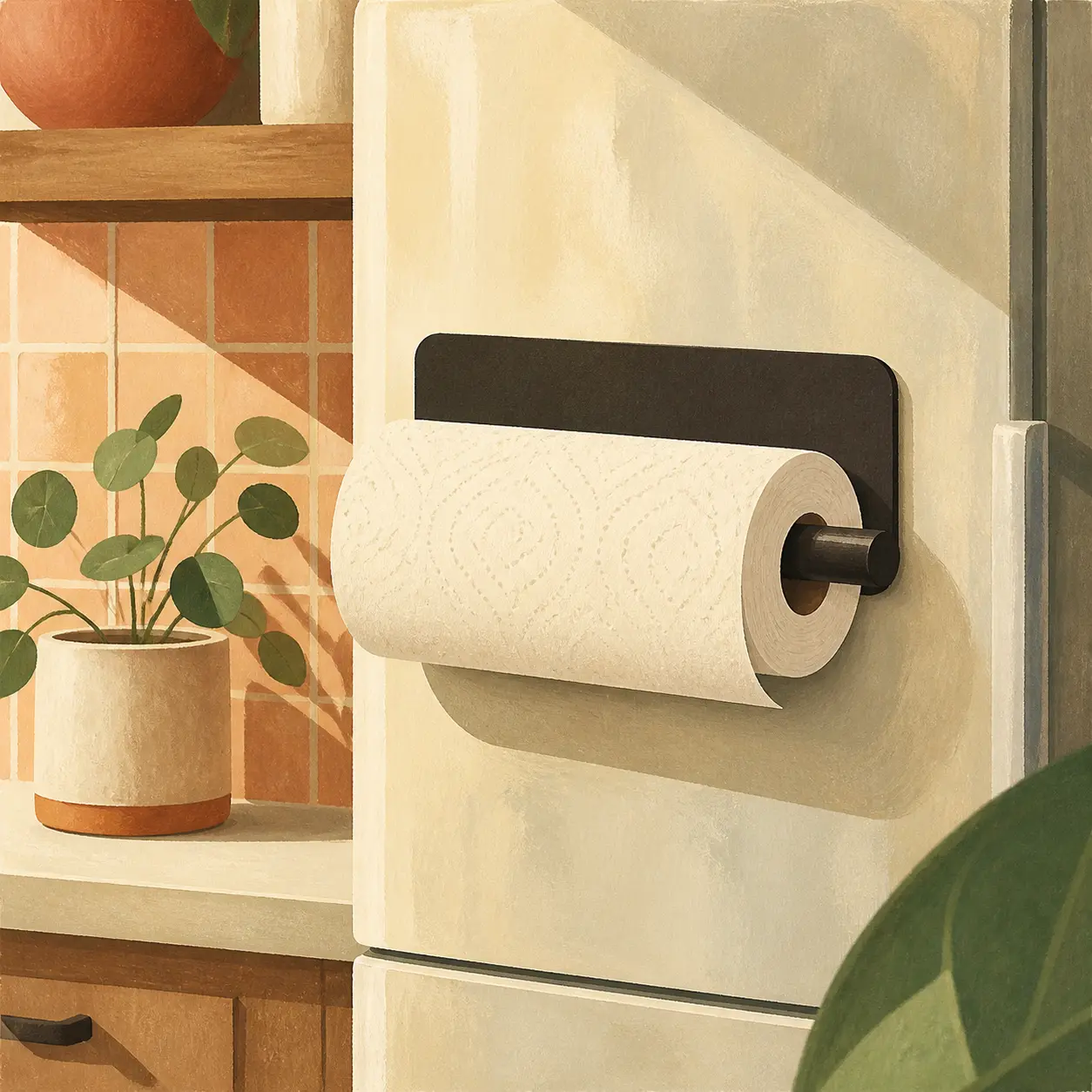
If that does not fit
- Freestanding narrow shelving when no surface can be trusted.
- Over-door hooks instead of an over-door shelf unit where hinge load is a concern.
- A rolling cart that needs no mounting at all when floor space allows.
Common mistakes to avoid
- Mounting adhesive in a steamy bathroom without a full cure period first.
- Using a tension rod to carry outward load, such as a shelf tray.
- Hanging an over-door unit on a door that is already slightly warped or rubbing.
- Assuming a magnetic fitting works on any metal — many appliance panels are not ferrous.
Will this fit your space?
Apartments differ more than product listings suggest. Treat every recommendation here as a starting hypothesis for your own measurements — if a number in your space contradicts a number in this guide, trust your tape measure.
Keep going
More rooms, setups, and guides to read next.