
The Best Storage Solutions for Small Apartments
The best storage solutions for small apartments are the ones that fit an awkward dimension you already have. This is our room-by-room shortlist, with the tradeoff for each type stated up front.
The short version
- The best small-apartment storage adds vertical capacity without touching the floor plan.
- Closet baskets, over-door shelving and under-sink pullouts solve the four spaces that fail first.
- Every pick here depends on one measurement — take it before you shop, not after delivery.
The problem, precisely
Searching for the best storage solutions for a small apartment usually returns a list of products with no mention of the constraint that decides whether they work: the specific dimension of the space you are filling. A closet basket set is the best answer for a shelf 30 cm deep and the worst answer for one 18 cm deep. This roundup keeps each recommendation attached to the space it belongs to, so the shortlist stays short.
Constraints this guide assumes
- Renters cannot move rods, plumbing or cabinetry to suit a product.
- Floor space is the scarcest resource, so vertical and door-mounted capacity wins.
- Anything bought must survive a move without being rebuilt.
Measurement checklist
Take these before you shop. Write them down in one note and carry it with you.
- 1Closet: rod height, shelf depth and garment drop.
- 2Bathroom: usable depth under the sink to the drain trap and vertical clearance to the shower valve.
- 3Kitchen: interior cabinet width at its narrowest point and drawer depth.
- 4Entry and laundry: the appliance gap width and the door swing arc.
- 5Every opening the assembled unit must pass through diagonally.
The decision, step by step
Pick the room that fails first, not the room that annoys you most
One space in a small apartment absorbs the overflow from every other space. Fixing that space returns the most capacity per purchase, which is why our shortlist is ordered by room rather than by product category.
Choose vertical capacity before floor capacity
Closet baskets, hanging shelf towers and over-door racks add storage in air that is already yours. Floor-standing units trade a scarce resource for a plentiful one and usually feel worse after a week.
Match the shape to the obstruction
Under-sink pullouts and expandable trays exist because the space has a pipe, a hinge or a valve in it. When an obstruction is in play, an adjustable type beats a sturdier fixed one.
Buy one, live with it a week, then buy the set
Small-apartment storage compounds: the first unit changes where things naturally land. Waiting a week before duplicating avoids a matching set that solves last week's layout.
What we'd shop for this
A short list of pieces that suit the plan above.
As an Amazon Associate I earn from qualifying purchases.
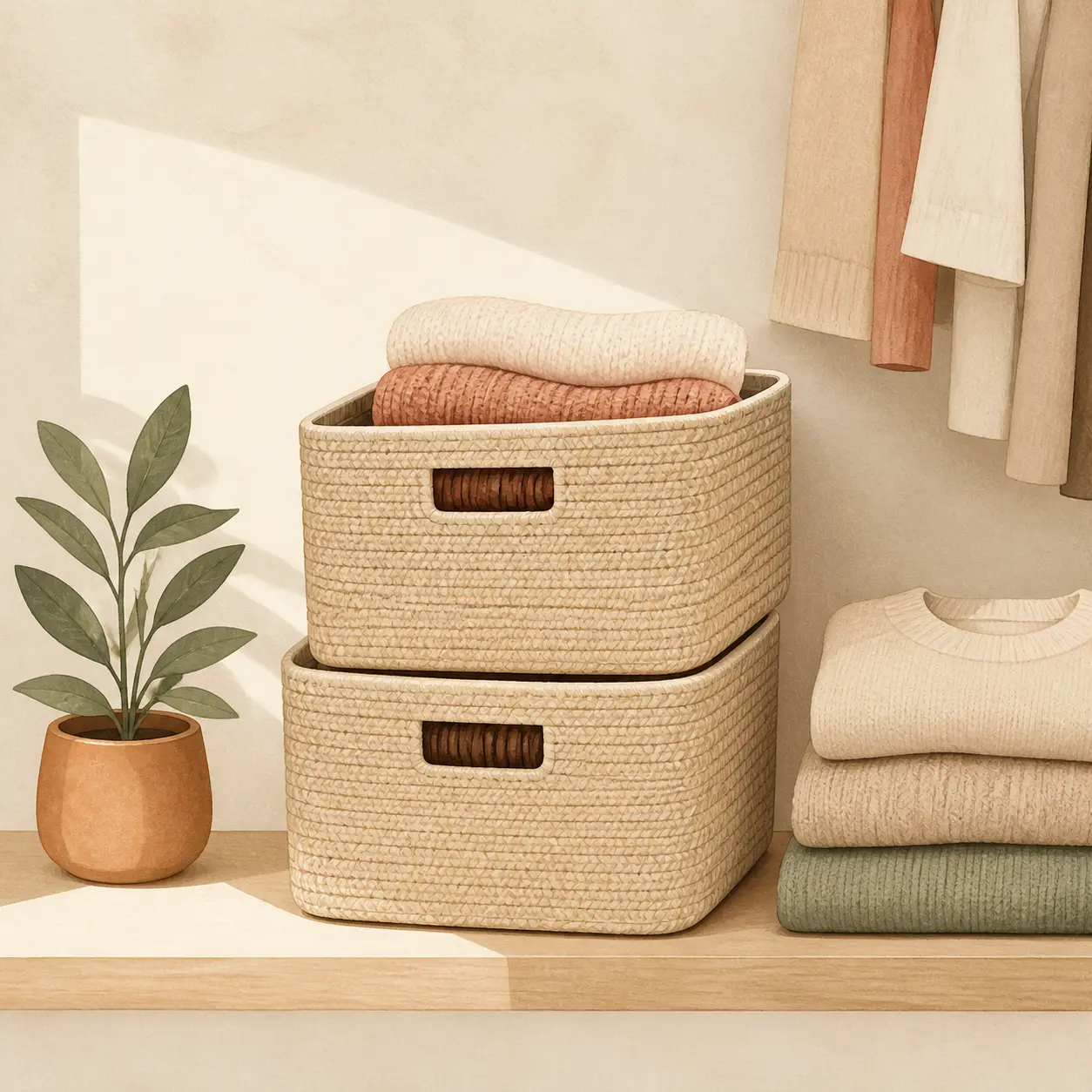
Bedroom & closet
Stackable Closet Basket Set
Turns a deep closet shelf into tidy, lift-out sections for folded clothes.
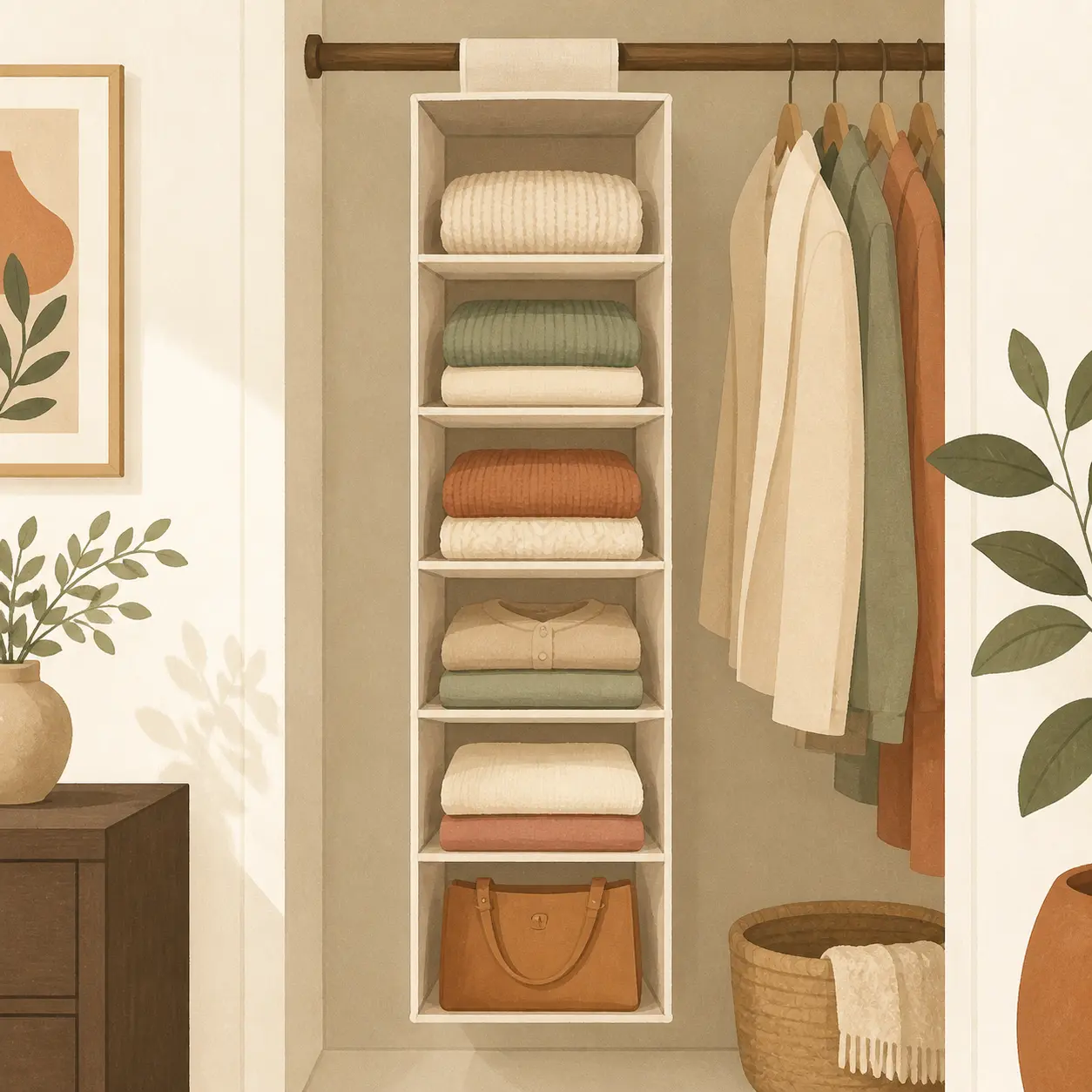
Bedroom & closet
Six-Shelf Hanging Closet Organizer
Hangs from the rod to give sweaters, bags and folded stacks their own shelves.
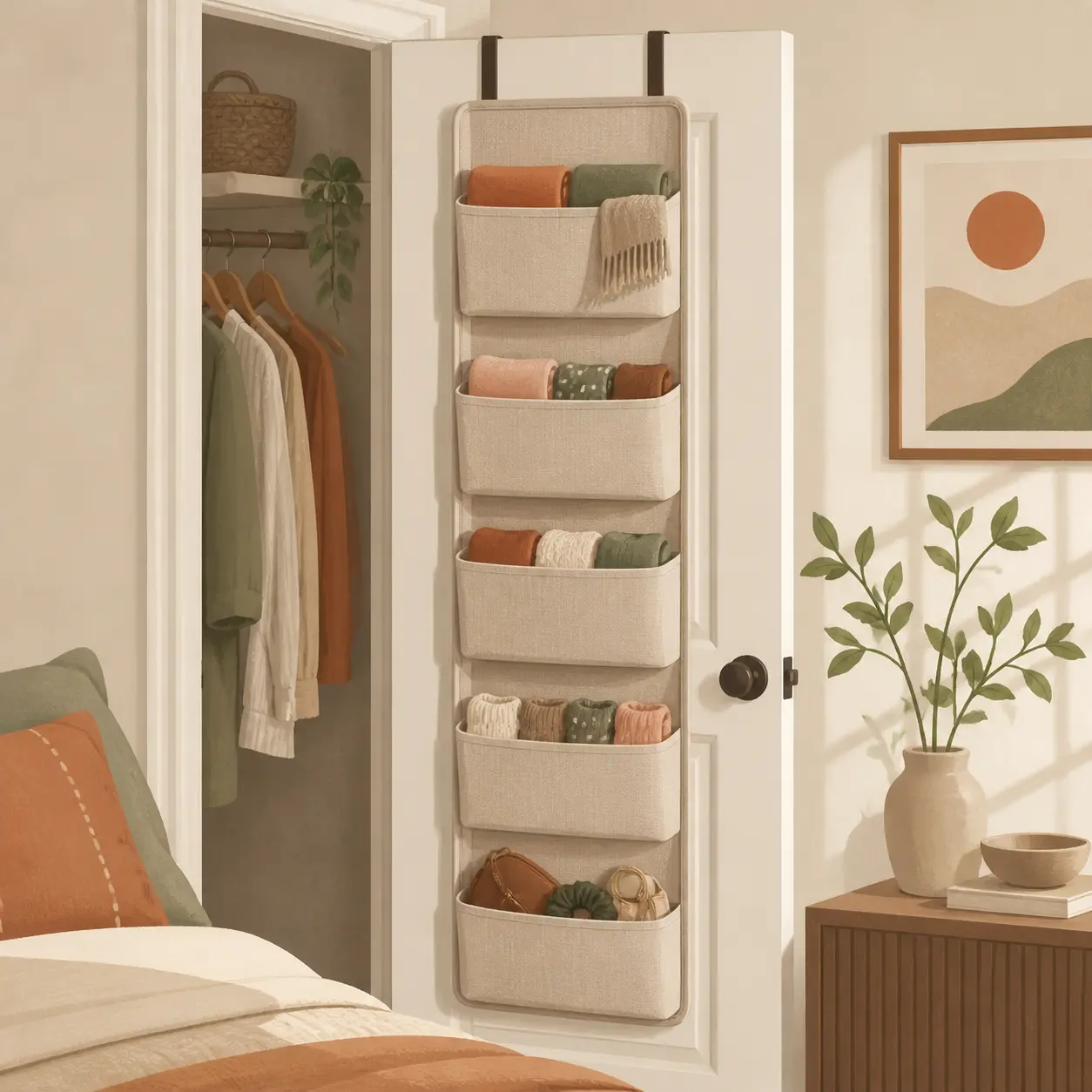
Bedroom & closet
Over-Door Five-Shelf Organizer
Adds five shallow shelves to the back of a closet door for everyday essentials.
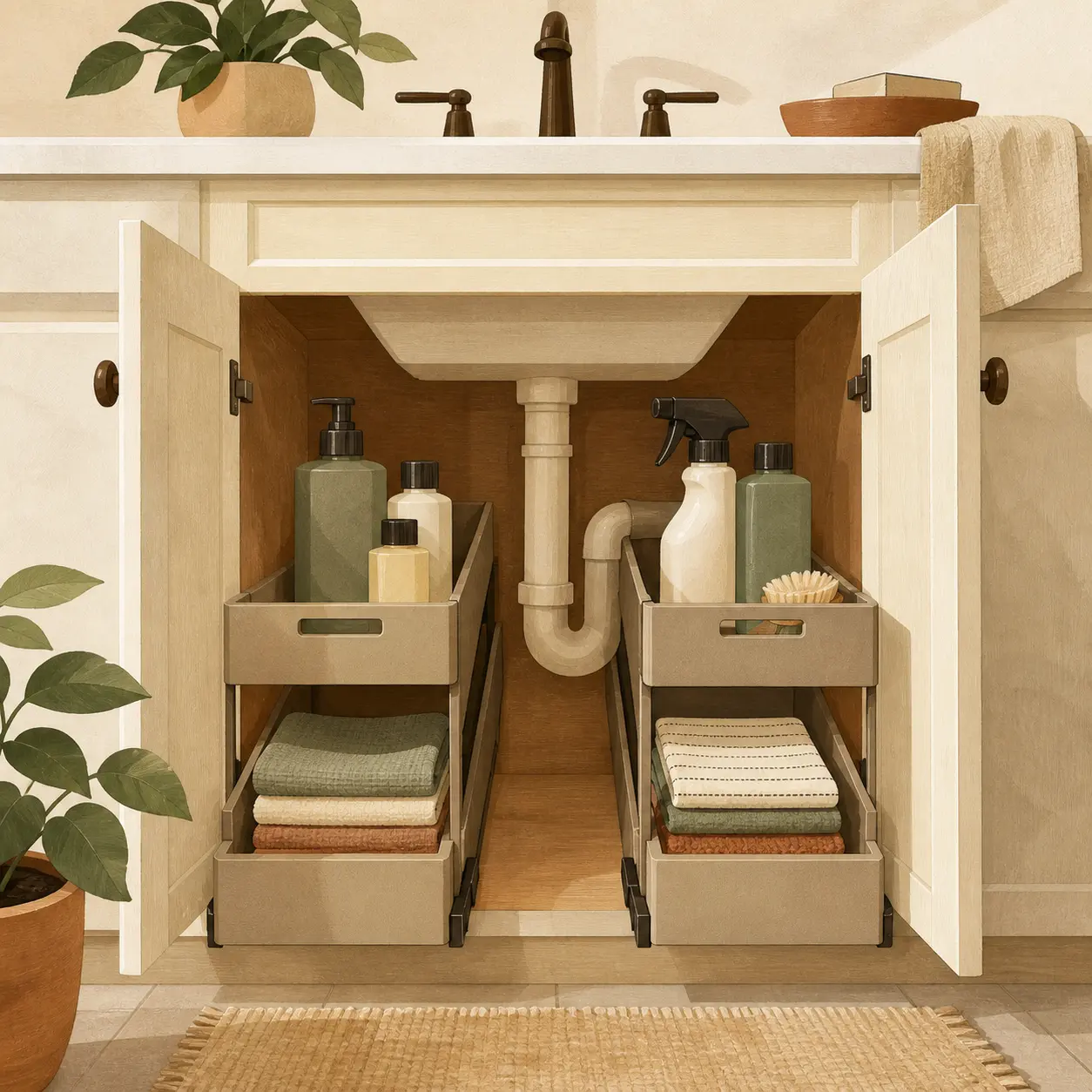
Bathroom
Pull-Out Under-Sink Organizer
Slides out so the back of the cabinet is easy to reach around the pipes.
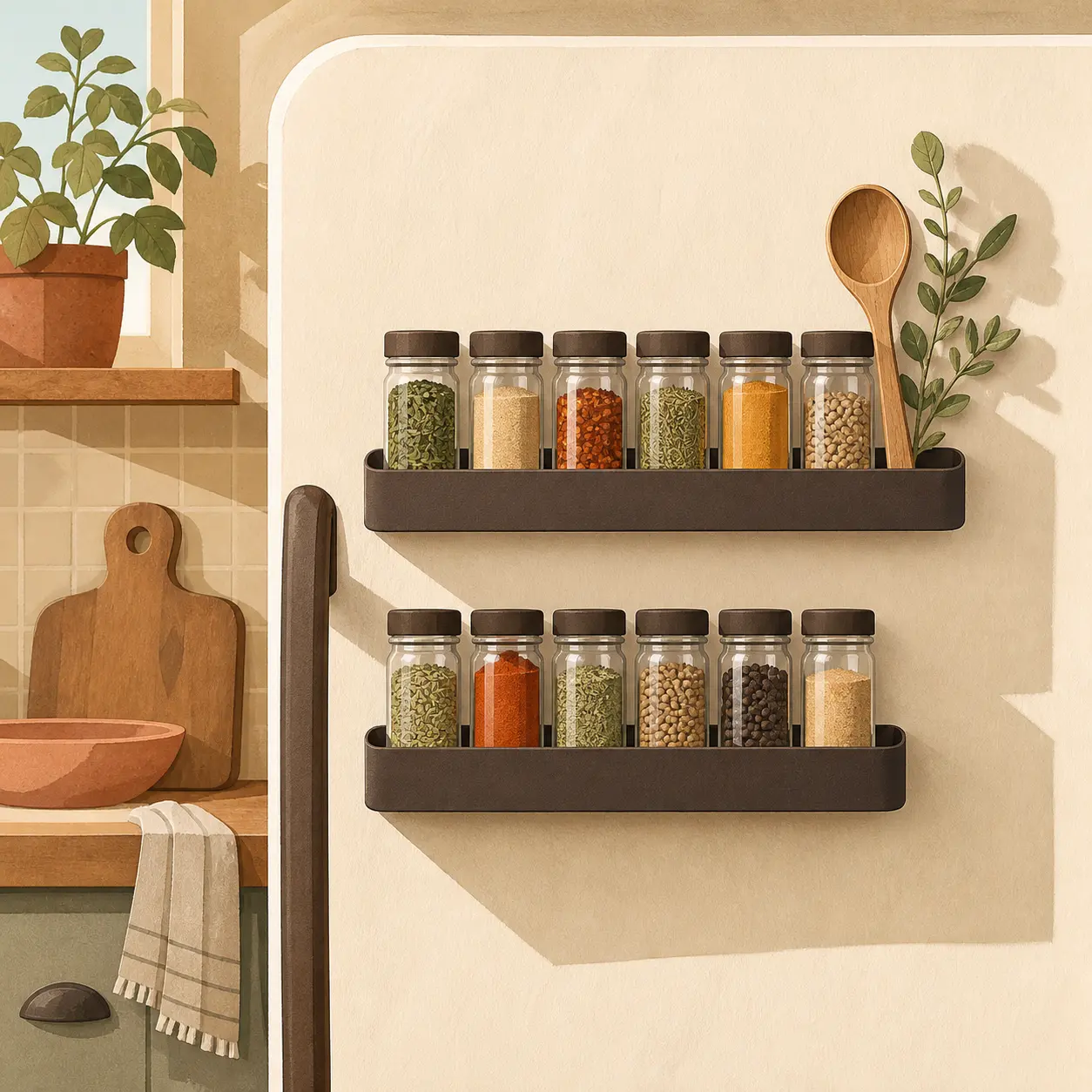
Kitchen
Magnetic Spice Rack
Keeps everyday spices on a magnetic surface so the cabinet stays clear.
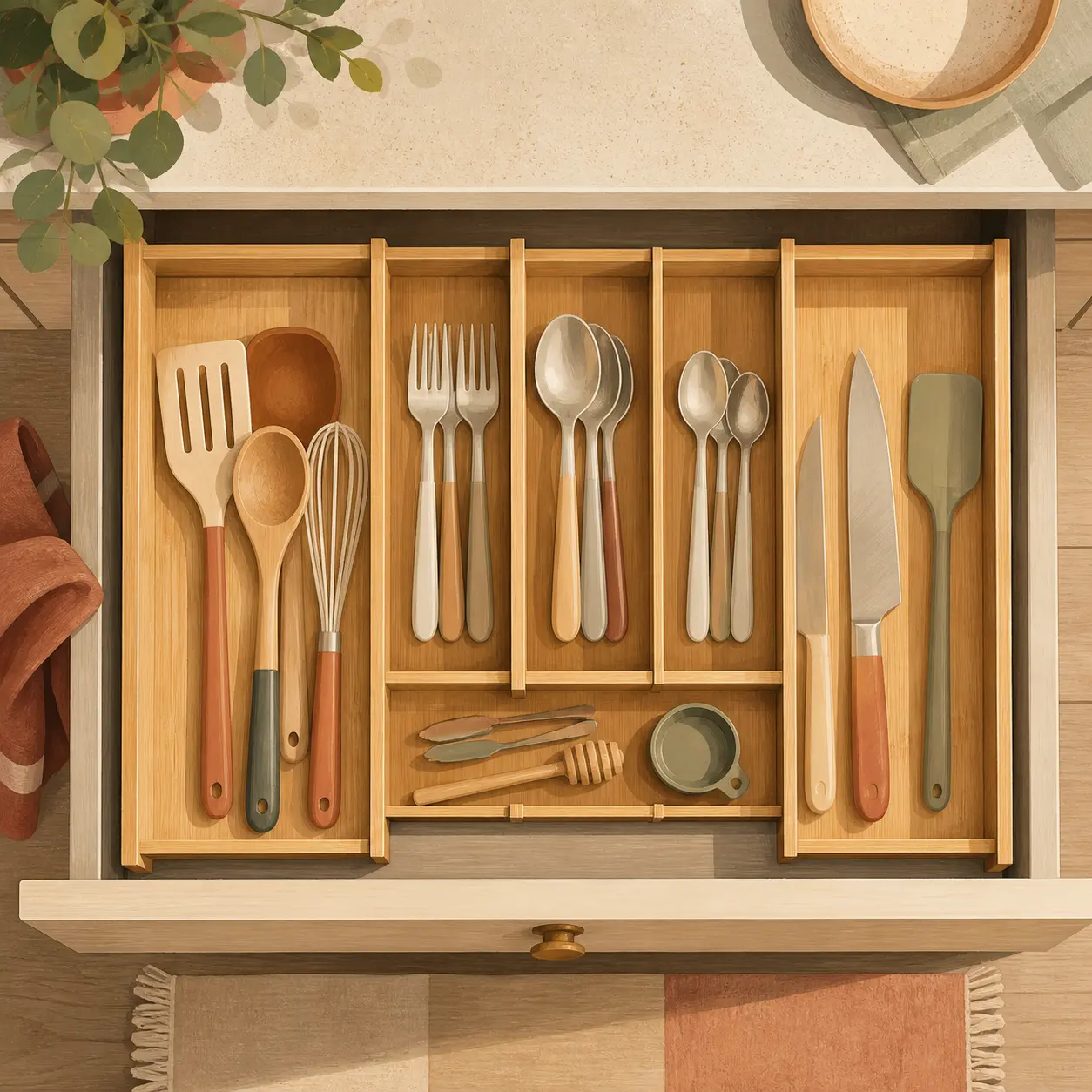
Kitchen
Expandable Utensil Drawer Organizer
Adjusts to the width of a shallow drawer so utensils stop rolling around.
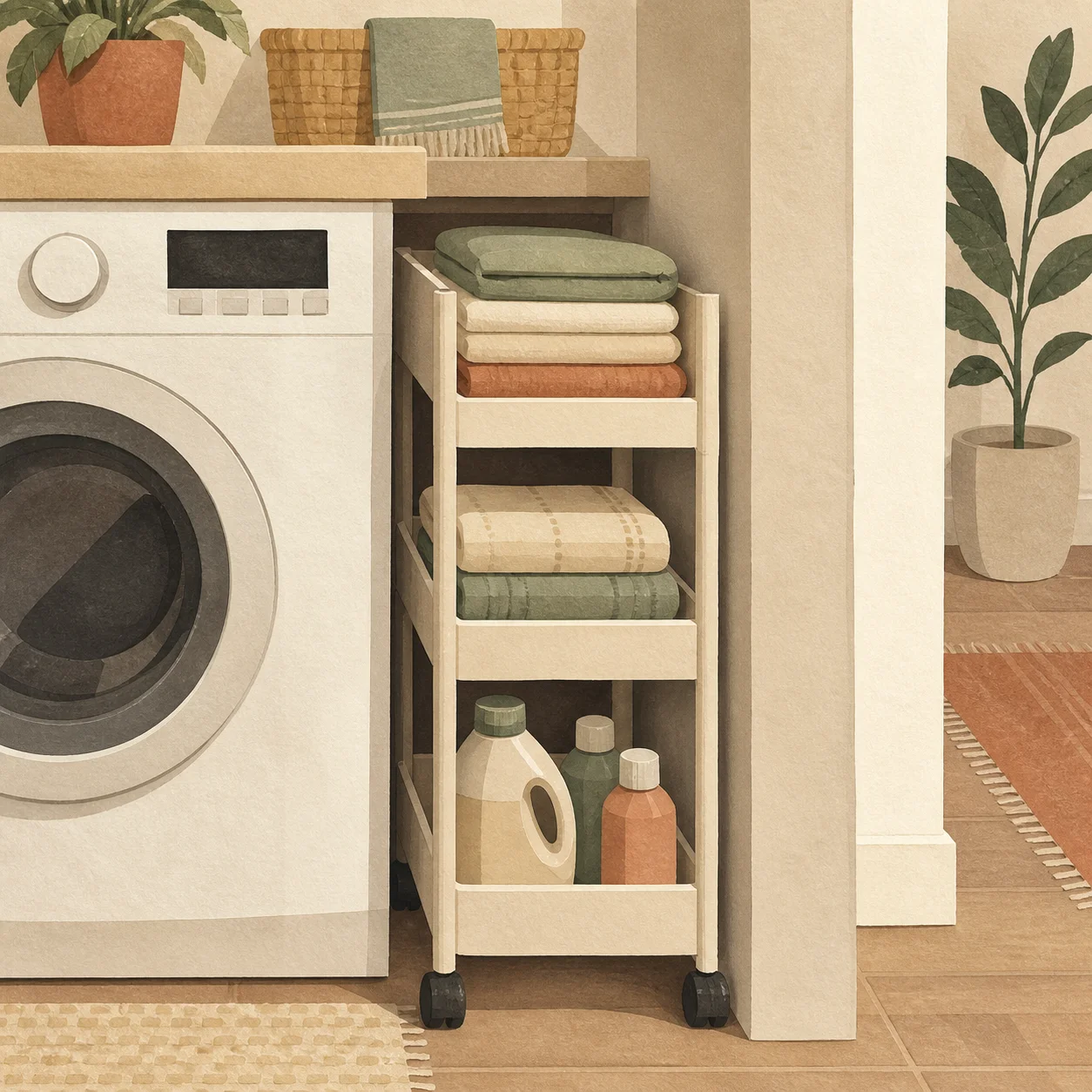
Entry & laundry
Slim Rolling Laundry Cart
Rolls into a narrow gap beside the machines and pulls straight out again.
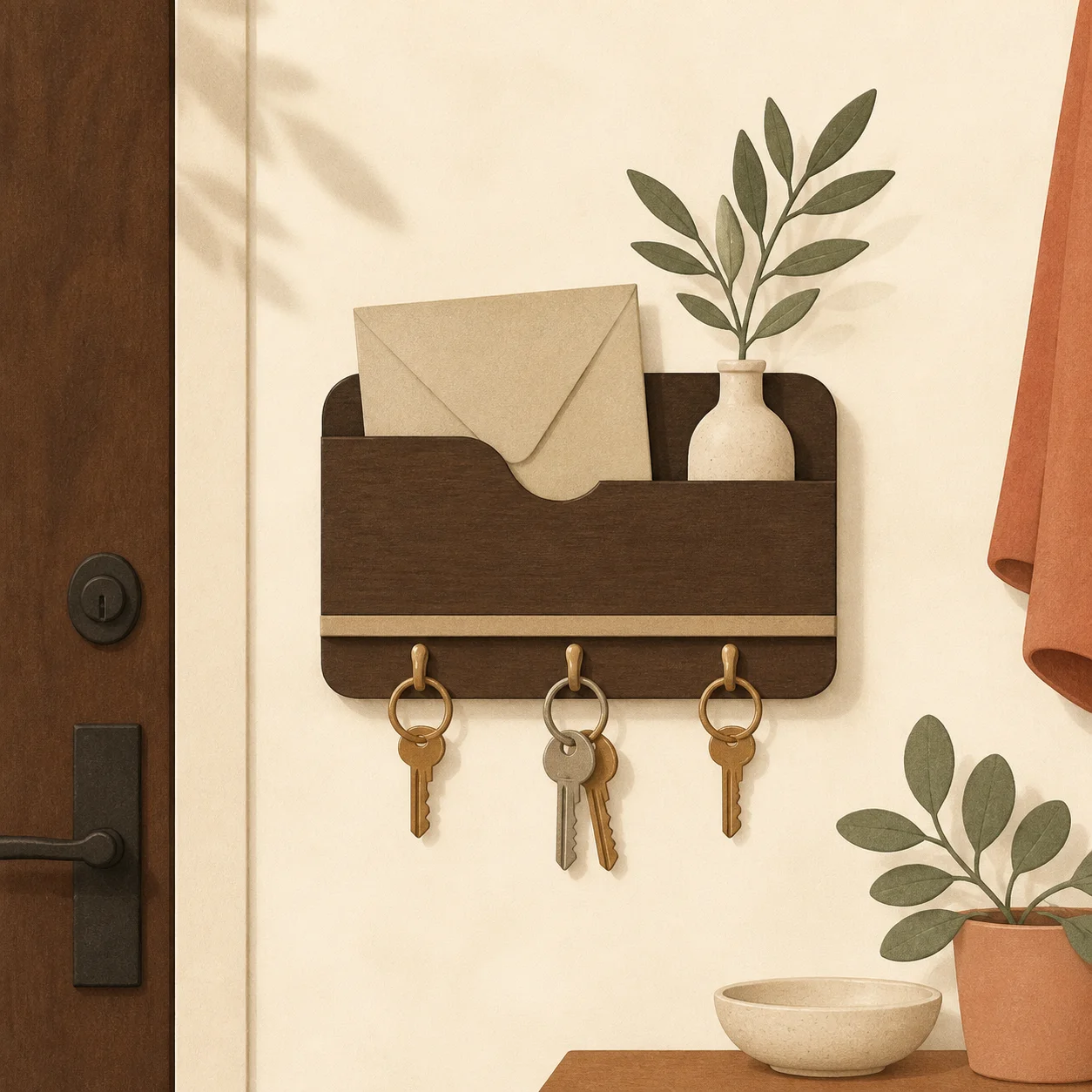
Entry & laundry
Key-and-Mail Wall Organizer
Gives keys and post one landing spot right by the front door.
If that does not fit
- Collapsible fabric bins when the depth measurement is uncertain and you want forgiveness.
- A single tall shelf tower instead of several small racks when width is the tight number.
- Stackable crates when you expect to move inside a year and want nothing mounted.
Common mistakes to avoid
- Buying a matching set before testing one unit in the real space.
- Filling floor area with a unit that solves a shelf problem.
- Ignoring door and drawer swing, which quietly removes usable depth.
- Trusting a 'fits standard cabinets' claim instead of your own narrowest measurement.
Will this fit your space?
Apartments differ more than product listings suggest. Treat every recommendation here as a starting hypothesis for your own measurements — if a number in your space contradicts a number in this guide, trust your tape measure.
Keep going
More rooms, setups, and guides to read next.