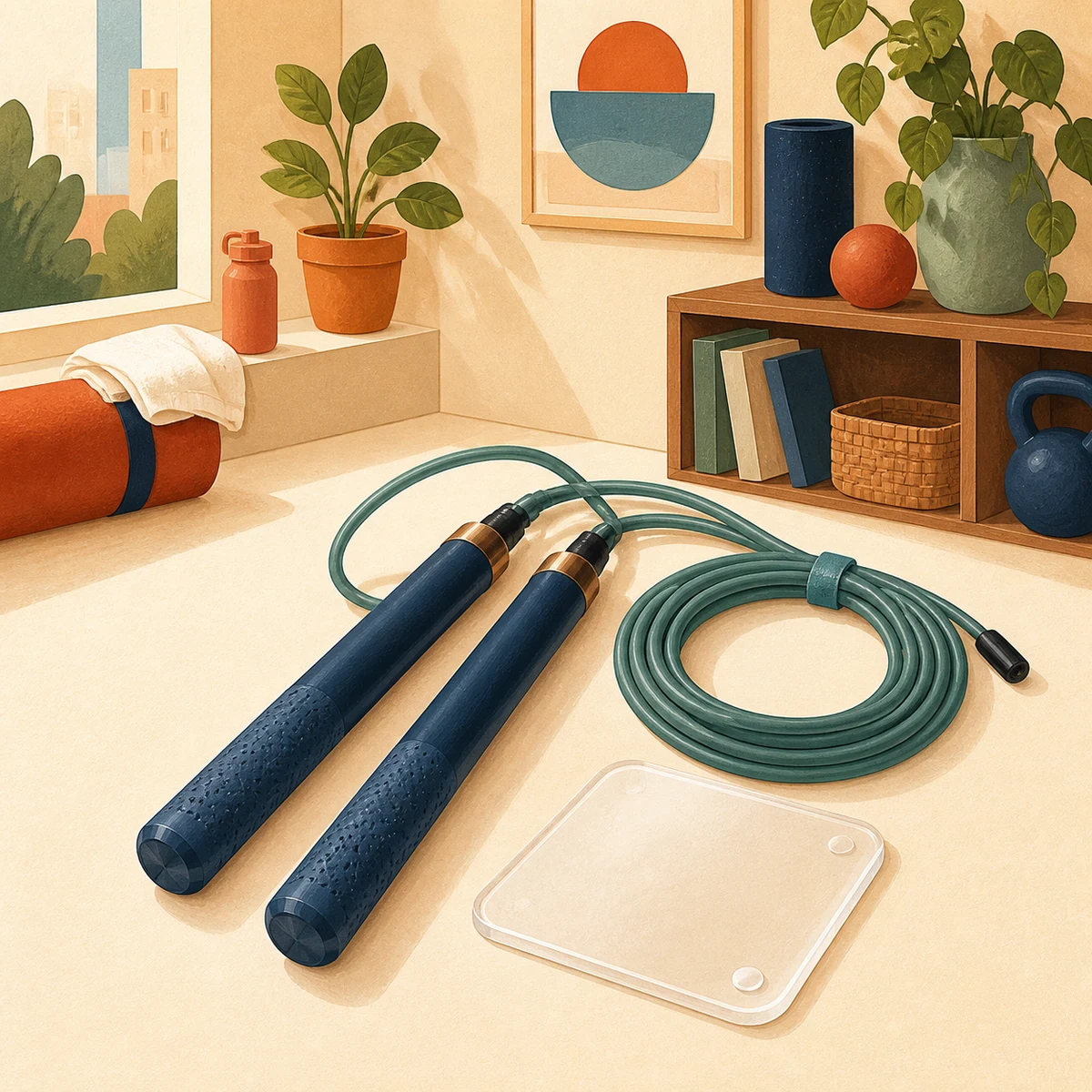
Adjustable Speed Jump Rope
Cut to your height for cardio in about a square metre.
View on AmazonYou do not need a spare room. You need about two square metres of clear floor, kit that stacks vertically, and a sequence that stops you buying the wrong thing first.
7 min read · Home gym
Lie on the floor with your arms out. That rectangle, plus a little space at your feet, is the whole gym. In most flats it is around two by one metres, and it usually only exists after a coffee table moves. Mark it with tape for a week and see whether the space genuinely works before you commit.
Two constraints decide most of your purchases: ceiling height (overhead presses and jump rope both need clearance) and floor type. On the ground floor of a house, impact matters less. In an upstairs flat, noise transfer is the deciding factor and you will get more out of resistance and controlled strength work than plyometrics.
A thick exercise mat does three jobs: it protects the floor from dropped weights, it dampens the sound that reaches a neighbour, and it visually marks where training happens, which matters more for consistency than most people expect. Choose an extra-thick mat if you do floor work on a hard surface, and a thinner, grippier yoga mat if your sessions are mostly standing, balance and stretching.
If you can only afford one surface, buy for the harder use case. A thicker mat rolls up and stands in a wardrobe corner; a thin one under dumbbells does not survive.
In a small flat, the value of a piece of equipment is roughly the number of exercises it enables divided by the space it occupies. That maths favours a resistance band set, a jump rope and a small number of dumbbells over anything single-purpose.
A resistance band set covers pulling movements — the ones that are hardest to train at home without a rack — and stores in a drawer. A speed rope gives you conditioning in the same footprint as your mat, assuming ceiling height and neighbours allow it. Dumbbells then add the load: start with one pair you can press for around ten controlled reps, and add a heavier pair for lower-body work later rather than buying a full set at once.
A doorway pull-up bar is the biggest capability upgrade for the space it uses, but it depends entirely on your door frame: measure the frame width and check the architrave depth and condition before ordering. Rented flats with thin plasterboard surrounds are the usual disappointment.
Bumper plates and an adjustable bench belong to the next stage — the spare-room setup rather than the living-room corner. A bench in particular needs a permanent home; if it has to be moved before every session, it will quietly end the habit. Only add them when you know which lifts you actually do every week.
Decide the stored position of every item before it arrives: mat rolled behind a door, bands on a hook inside a cupboard, dumbbells against a wall on their flat side, rope coiled with the bands. A flat gym that lives in a cupboard stays in use. One that lives in the middle of the living room gets packed away for good after a fortnight.
A mat sized to your training footprint, then a resistance band set, then one pair of dumbbells you can control for around ten reps. That covers most sessions before you need anything larger.
Mostly. Favour controlled strength work, bands and low-impact conditioning over jumping, put a thick mat under everything, and set weights down rather than dropping them.
A few things from the Home gym collection that fit what this guide describes.
As an Amazon Associate I earn from qualifying purchases.
Cut to your height for cardio in about a square metre.
View on Amazon
Extra padding for floor work on a hard apartment floor.
View on Amazon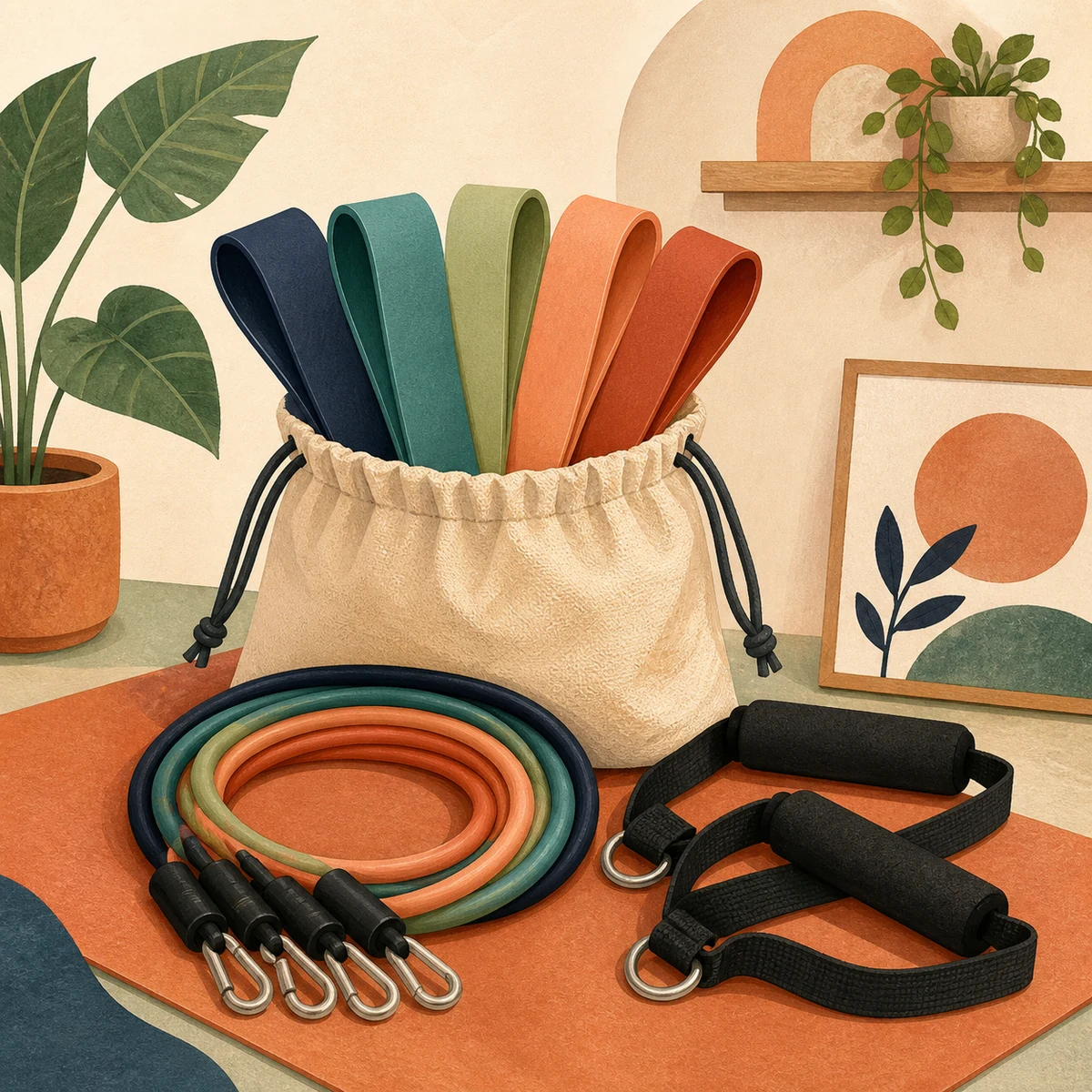
Several strengths in one pouch — the smallest way to add load.
View on Amazon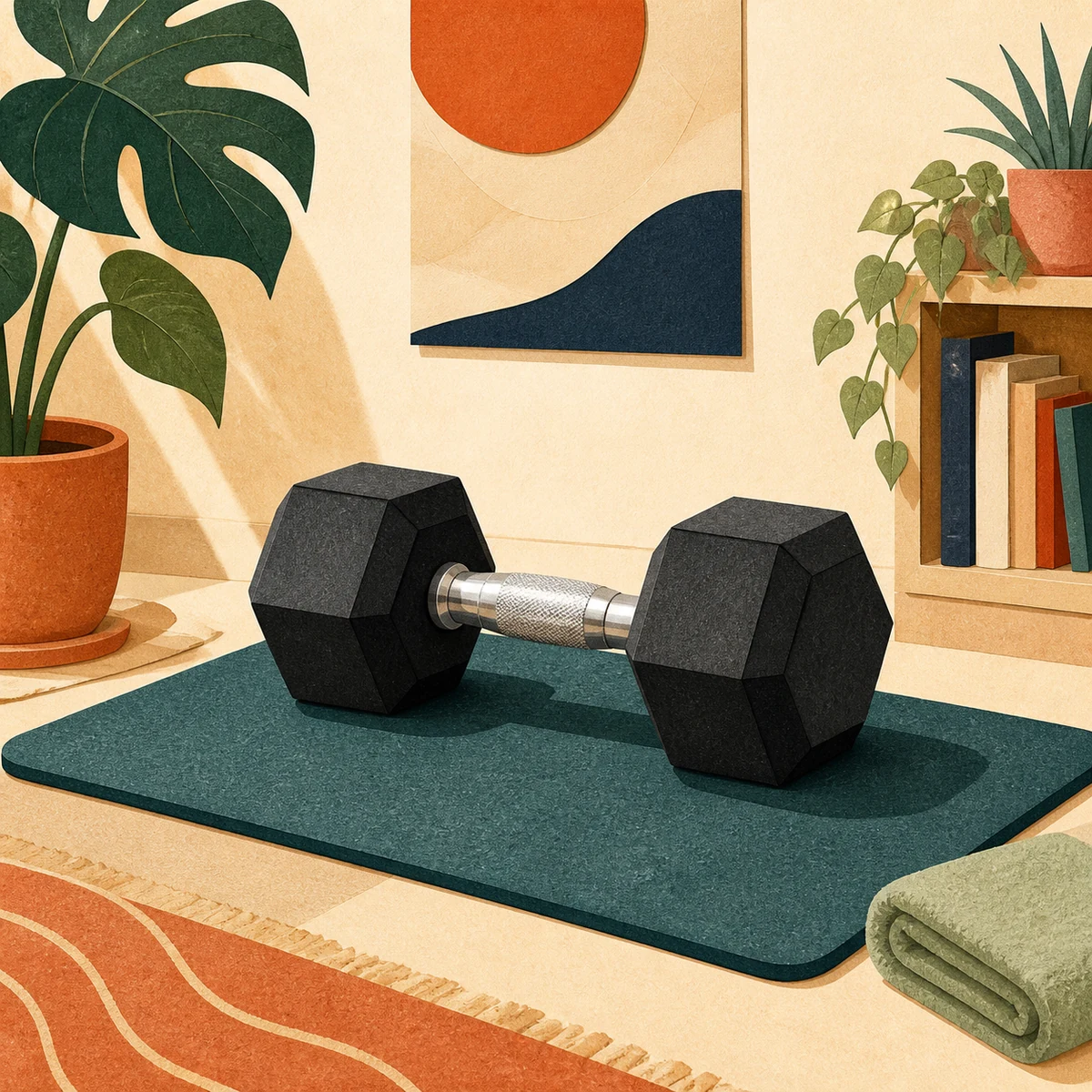
A flat-sided dumbbell that won't roll across the floor.
View on Amazon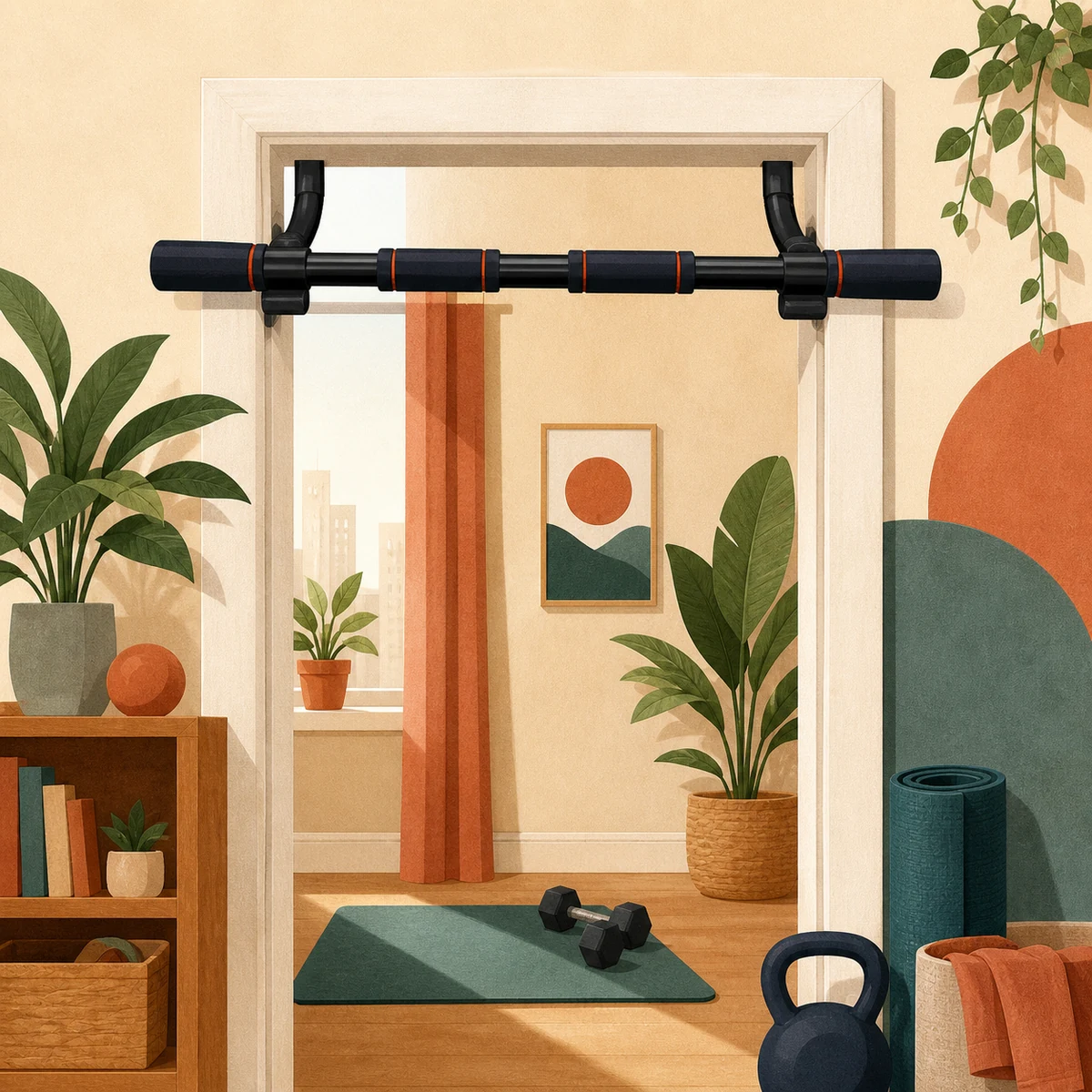
Mounts in a doorframe and lifts out when you're done.
View on Amazon