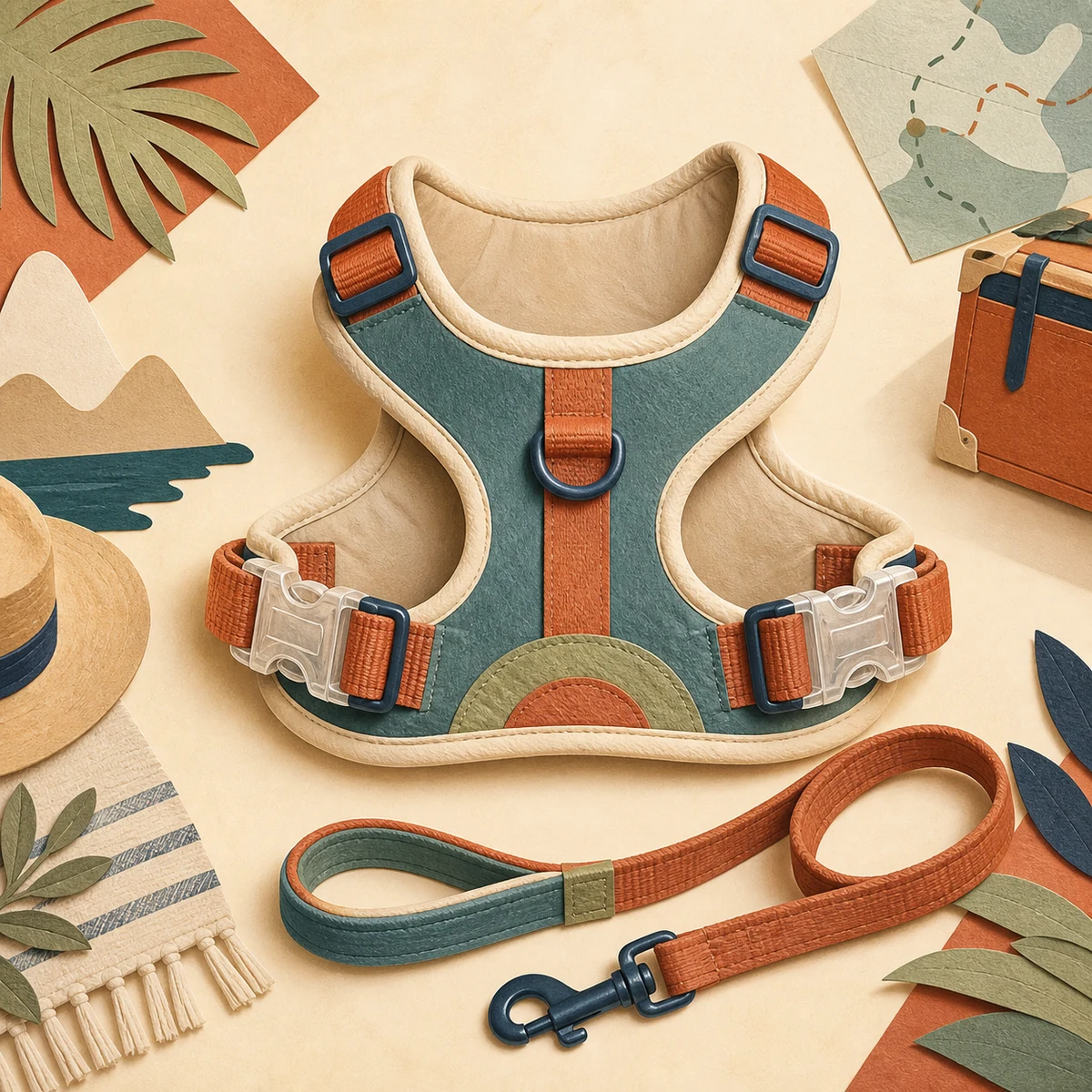
Step-In Travel Harness
Steps on in two clips — good for dogs that dislike things over the head.
View on AmazonMost car-trip stress with a dog comes from three things: an awkward harness, no easy way to offer water, and nothing to protect or clean the back seat. Solve those and the rest is just planning breaks.
6 min read · Dog travel
A harness is the piece of kit your dog wears for the whole journey, so comfort matters more than features. Measure the girth just behind the front legs and the base of the neck, then compare with the maker's sizing on the product page rather than guessing from your dog's weight.
Different styles suit different dogs. A step-in harness is easiest for dogs that dislike anything going over the head. A no-pull front-clip style helps on service-station walks with a dog that leans into the lead. A padded-handle harness gives you a controlled way to help a dog in and out of a boot. Reflective webbing is worth having for early starts and late arrivals, and a matched harness-and-lead set saves rummaging for a lead in the dark.
The realistic test for travel hydration is whether you can offer water while holding a lead. Collapsible bowls are light and pack into a door pocket, and they work well when you already carry a bottle. A dedicated travel bottle with an attached bowl is easier one-handed, which matters at a busy stop.
For anything longer than a day, a combined bottle-and-food container keeps a measured meal with the water so you are not opening a bag of kibble on the tailgate. Offer small amounts often rather than one large drink after hours in the car.
An elevated car seat suits small dogs who want to see out and settle in one place; it also keeps paws off upholstery. For medium and large dogs, the equivalent is a cover that fits the bench, and the same rule applies — put it in before the first walk, not after.
Never rely on a bed or cushion as restraint. Whatever setup you use, secure your dog with the harness and a purpose-made restraint or crate appropriate to your vehicle and to local rules.
Muddy paws are the main reason a tidy car stops being tidy. A pack of cleansing wipes in the door pocket takes thirty seconds at the end of a walk and saves an hour of vacuuming later. Keep a towel in the boot for wet days and a spare bag for anything soaked.
Round the kit out with the boring things people forget: poo bags in two places, a copy of vaccination details if you are staying somewhere, and a familiar blanket that smells of home for the settling-in period at the other end.
Break the journey every couple of hours for a short lead walk and a drink. Feed a light meal well before departure rather than just before, keep the cabin cool and shaded, and never leave a dog in a parked car. If your dog is new to long drives, build up with a few short trips that end somewhere enjoyable.
For most dogs, a well-fitted step-in or standard adjustable harness is the simplest starting point. Add a front-clip no-pull style if your dog leans hard into the lead on walks.
Not usually. A collapsible bowl is enough if you already carry water. A bottle with an integrated bowl replaces both and is easier to use one-handed at a stop.
A few things from the Dog travel collection that fit what this guide describes.
As an Amazon Associate I earn from qualifying purchases.
Steps on in two clips — good for dogs that dislike things over the head.
View on Amazon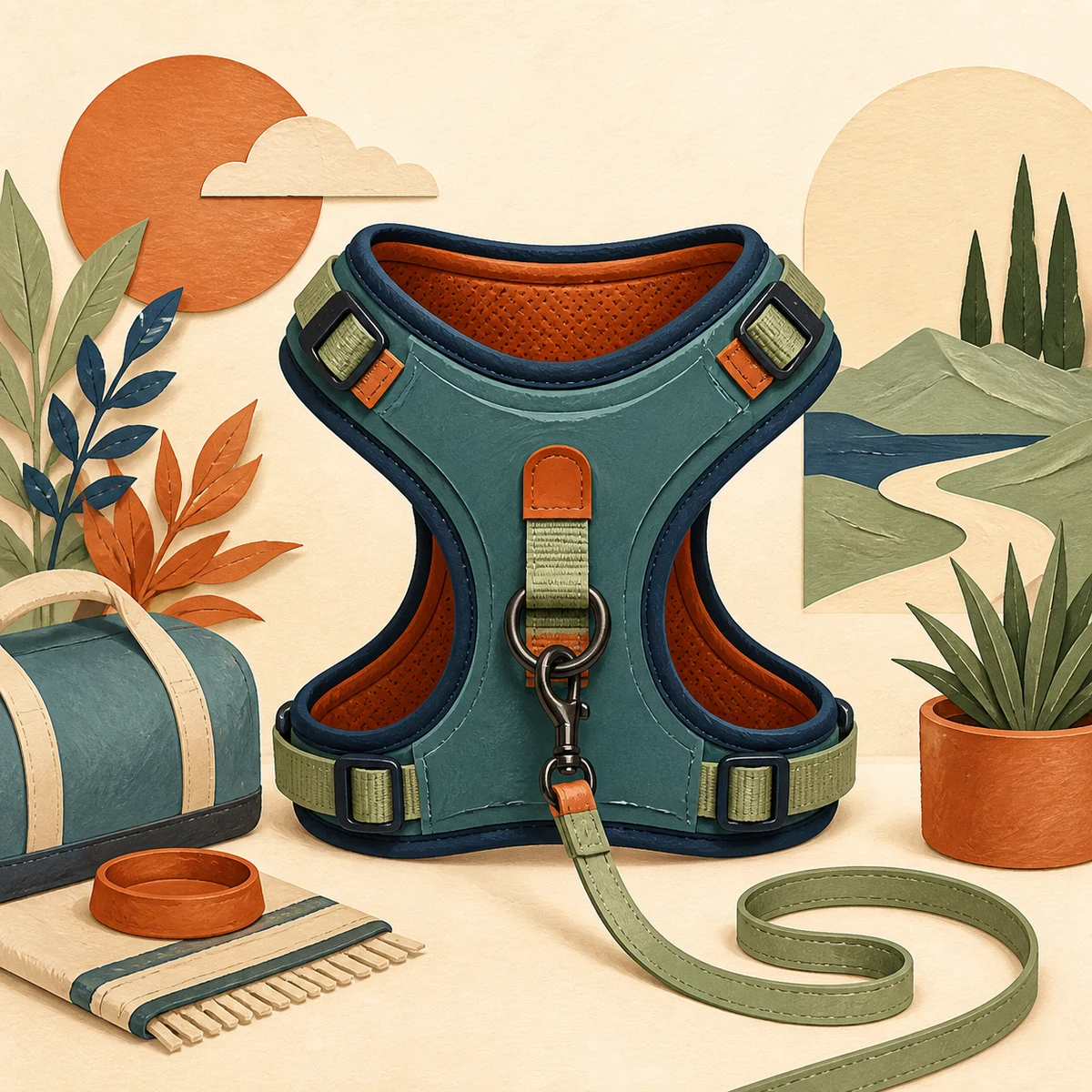
A front clip that turns a pulling dog gently back toward you.
View on Amazon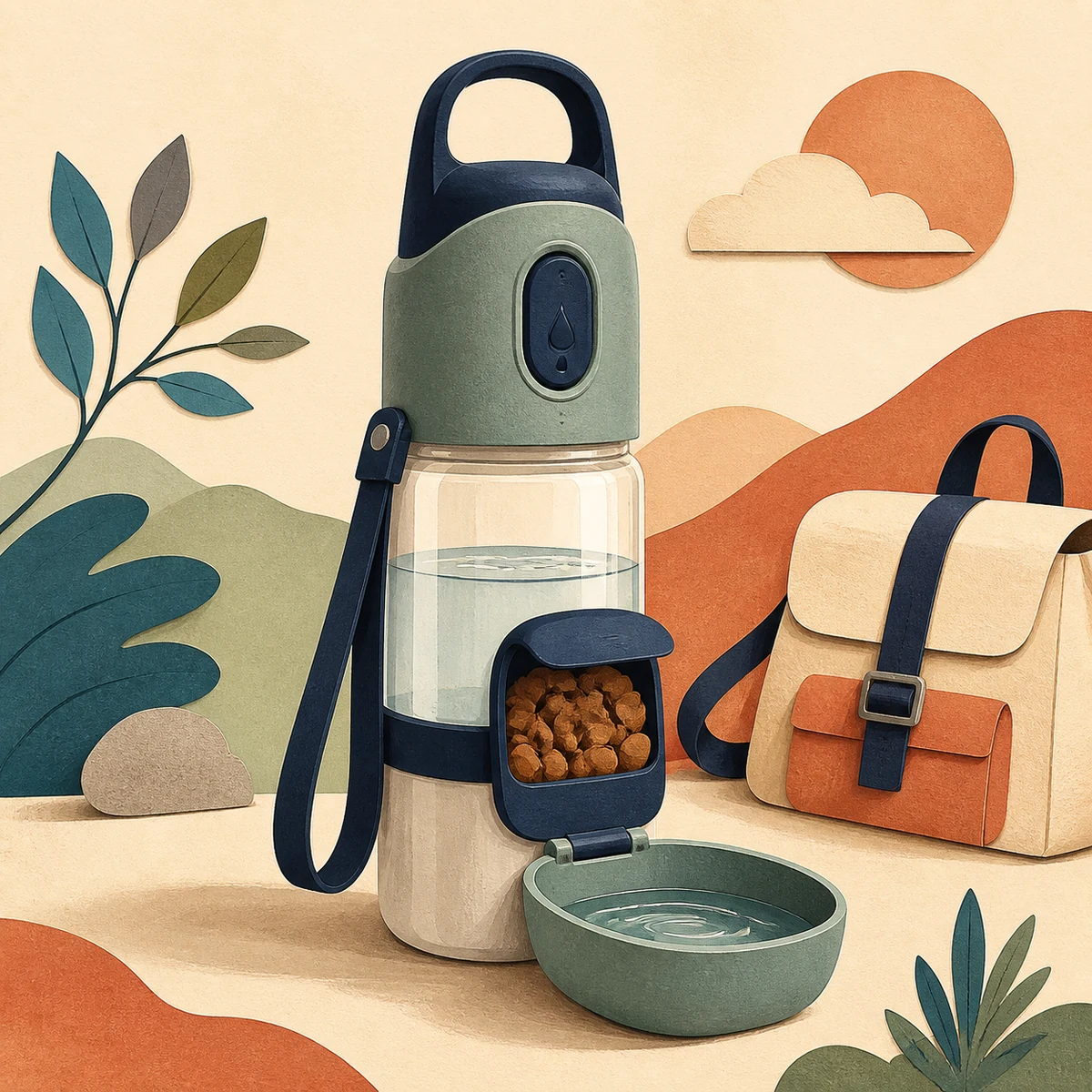
One bottle carries a drink and a portion of kibble together.
View on Amazon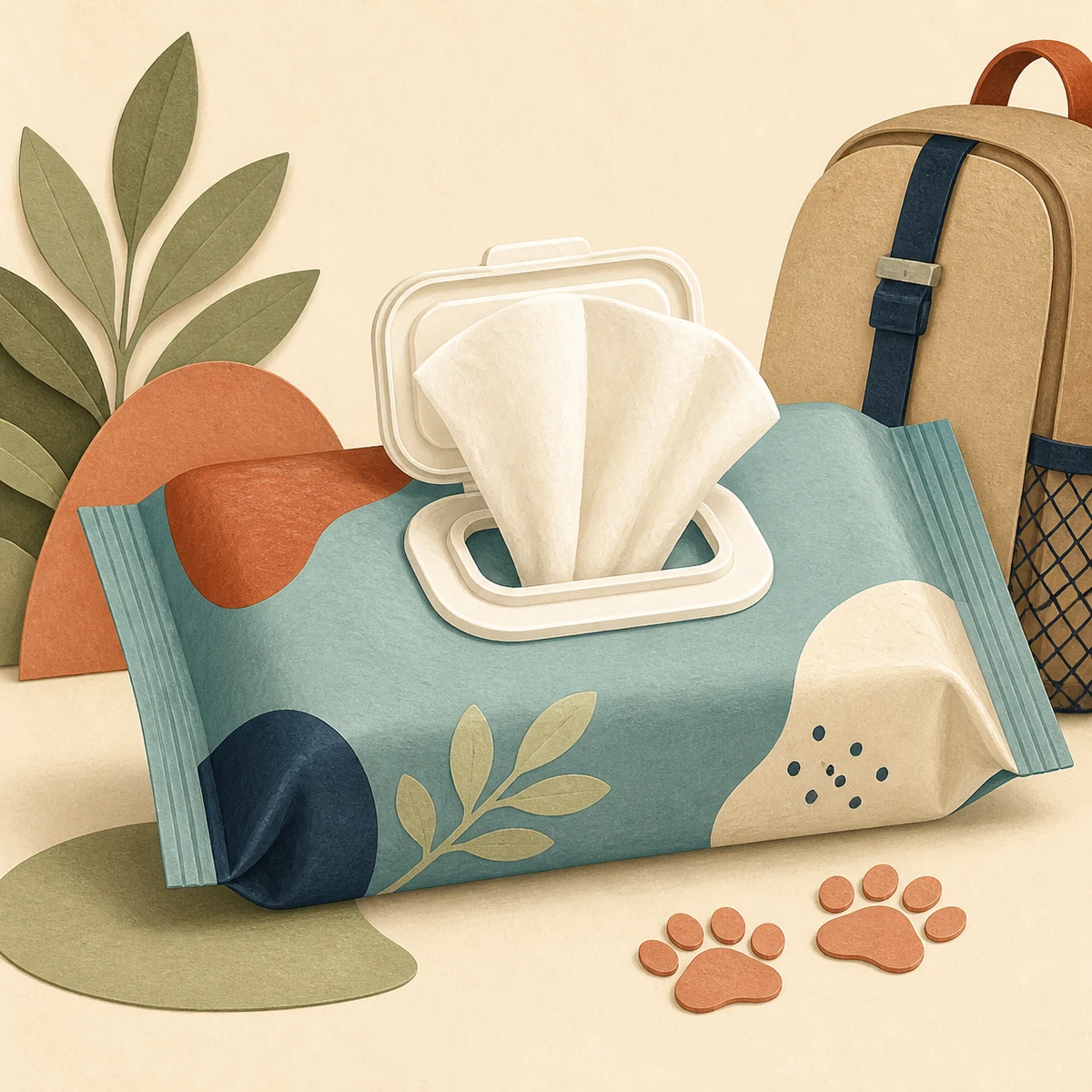
For muddy paws before they reach the upholstery.
View on Amazon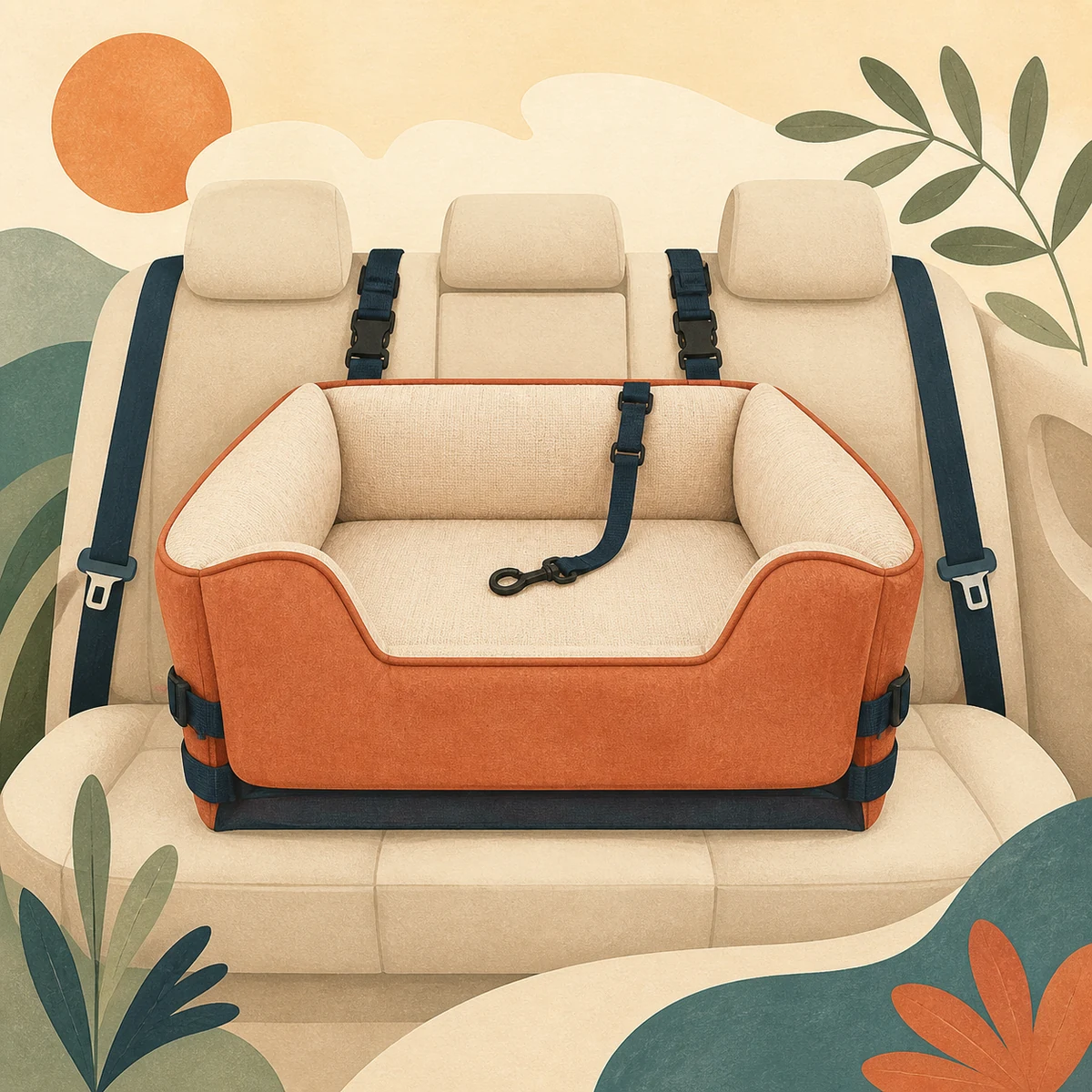
A raised, bolstered seat so a small dog can see out and settle.
View on Amazon