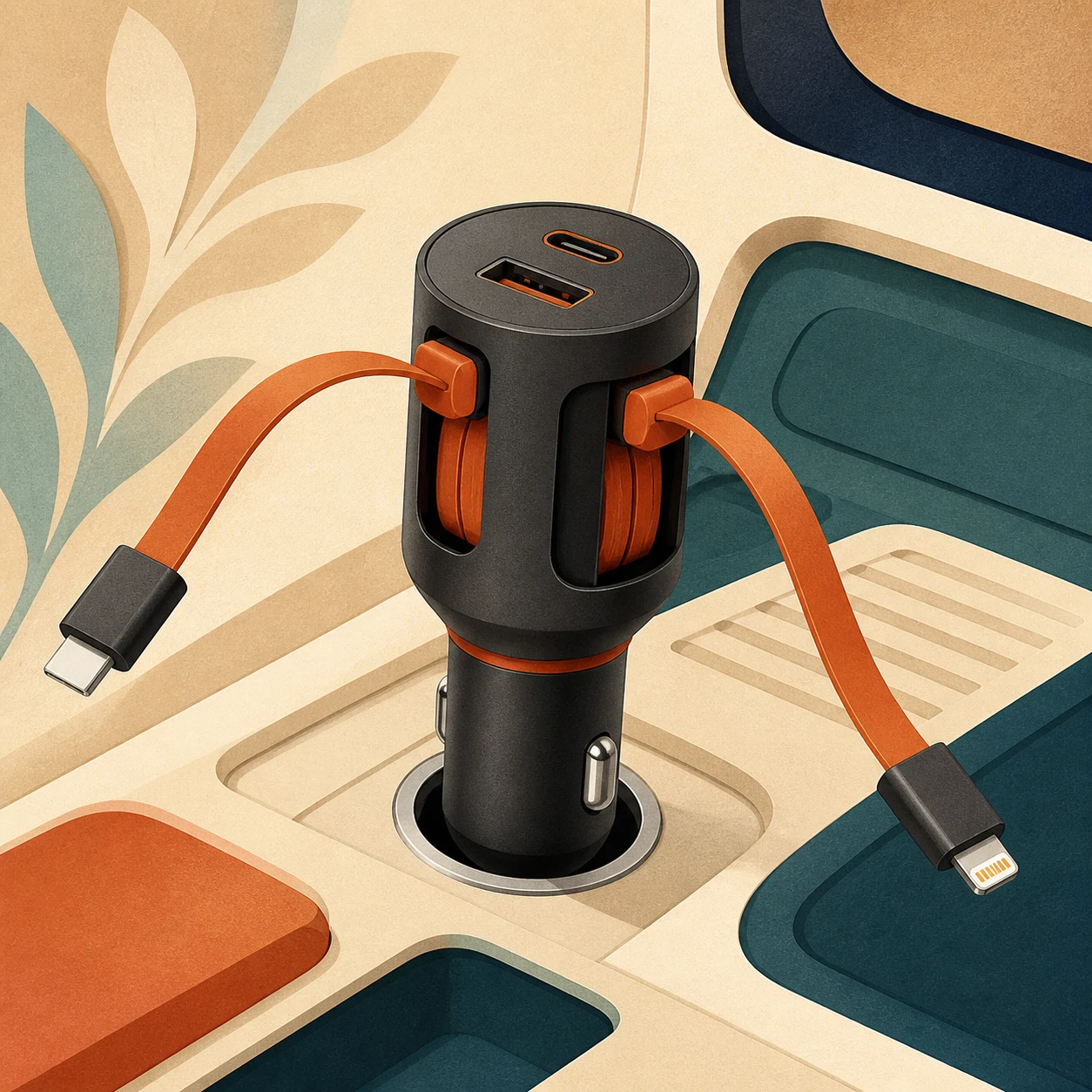
Retractable 4-in-1 Car Charger
Built-in cables retract, so four connectors live in one small unit.
View on AmazonCompact cabins punish anything bulky. The fix is to organize the gaps and vertical surfaces you already have, and to choose storage that folds away when you need the seat back.
6 min read · Car organization
A small car has three usable storage zones and one that should stay empty. The usable ones are the gap between the seat and the centre console, the vertical face behind each front seat, and the boot floor. The zone to leave alone is the rear footwell — filling it is what makes a compact car feel cramped for passengers.
Before you buy anything, take three measurements with a tape: the width of the seat gap at its widest point, the distance between the two front headrest posts, and the usable boot width at its narrowest point (usually between the wheel arches). Almost every disappointing car-organization purchase comes down to one of those numbers not being checked.
The seat gap is where phones, cards and coins disappear, and retrieving them usually means pulling over. There are two ways to handle it. A gap filler simply seals the opening so nothing falls through — the right answer if you already have enough storage. A seat-gap organizer replaces the empty slot with a small pocket for a phone, a card and a cable.
Pick one, not both, and pick per side: many people seal the passenger side and organize the driver's side. Whatever you choose, check that it does not sit over a seat-belt buckle or block the seat's fore-and-aft travel.
Headrest hooks turn dead space into a place for a tote or a shopping bag, which keeps the rear footwell clear and stops bags tipping over on corners. Keep the loads light and soft: hooks are for bags, not for anything hard that could shift in a sudden stop.
In the boot, the deciding feature is whether the organizer collapses. A rigid crate is fine in an estate car; in a hatchback it steals the space you need for a weekly shop. A foldable organizer with dividers keeps bottles upright on the drive home and flattens against the side when you need the whole floor.
The last third of car organization is not storage at all, it is routine. Registration and insurance documents belong in one slim holder that lives in the glovebox — not loose in the door pocket where they crease and slide. If you keep service records or several vehicles' paperwork together, a larger document holder with dividers is worth the space.
Charging is the same idea. One adapter or retractable cable that stays plugged in means you stop carrying cables between the house and the car. Add a small lidded bin within arm's reach of the driver and the cabin stays tidy without any weekly clear-out.
If you want to spread the job out, this order gives you the biggest improvement first and avoids buying twice.
Only if it folds flat. In a small boot, a collapsible organizer keeps bottles and bags upright on short trips and gets out of the way entirely when you need the full floor.
A filler seals the space so nothing drops through. An organizer swaps the gap for a small pocket. Choose the filler if you already have somewhere for your phone, the organizer if you do not.
A few things from the Car organization collection that fit what this guide describes.
As an Amazon Associate I earn from qualifying purchases.
Built-in cables retract, so four connectors live in one small unit.
View on Amazon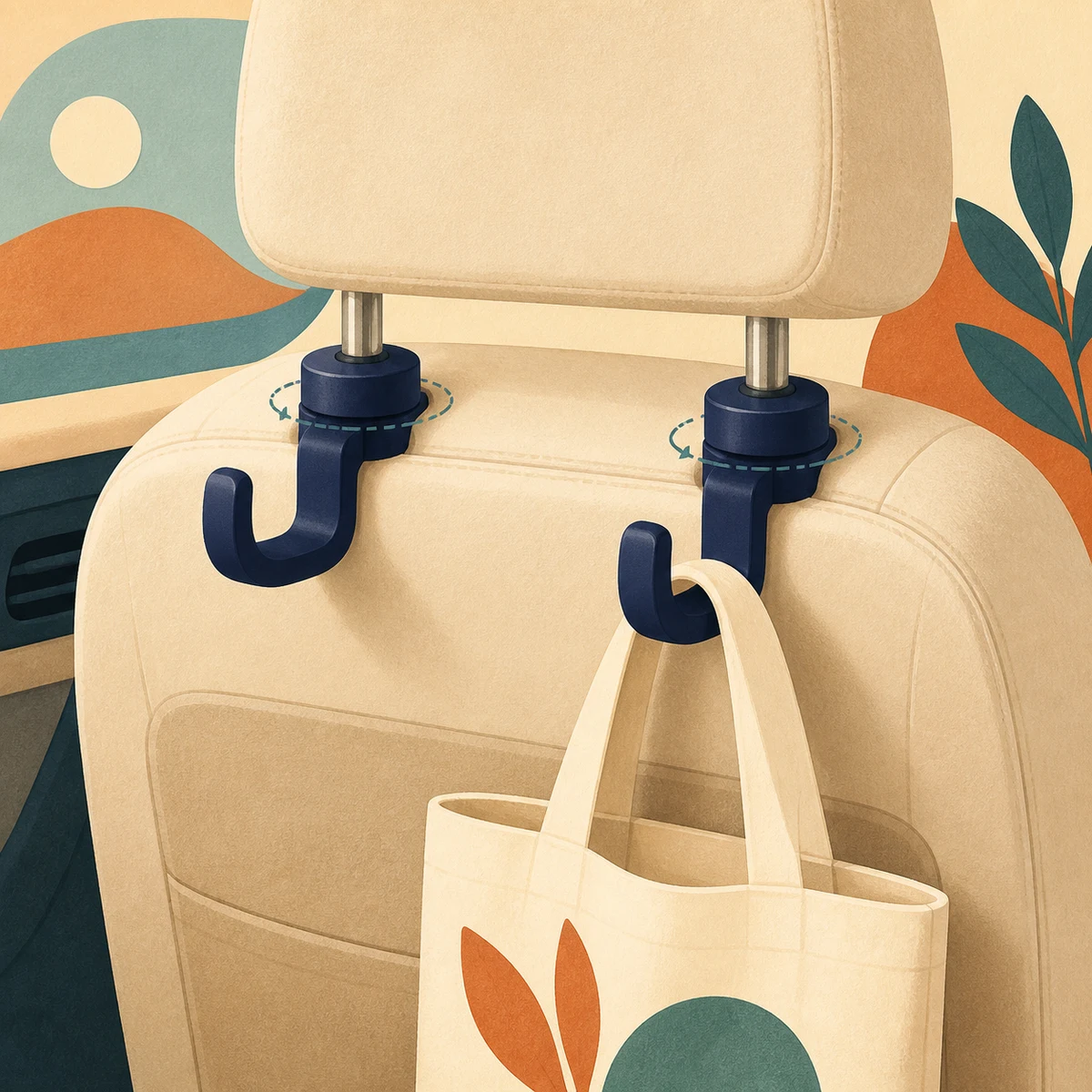
Two hooks to hang bags off the floor behind the front seats.
View on Amazon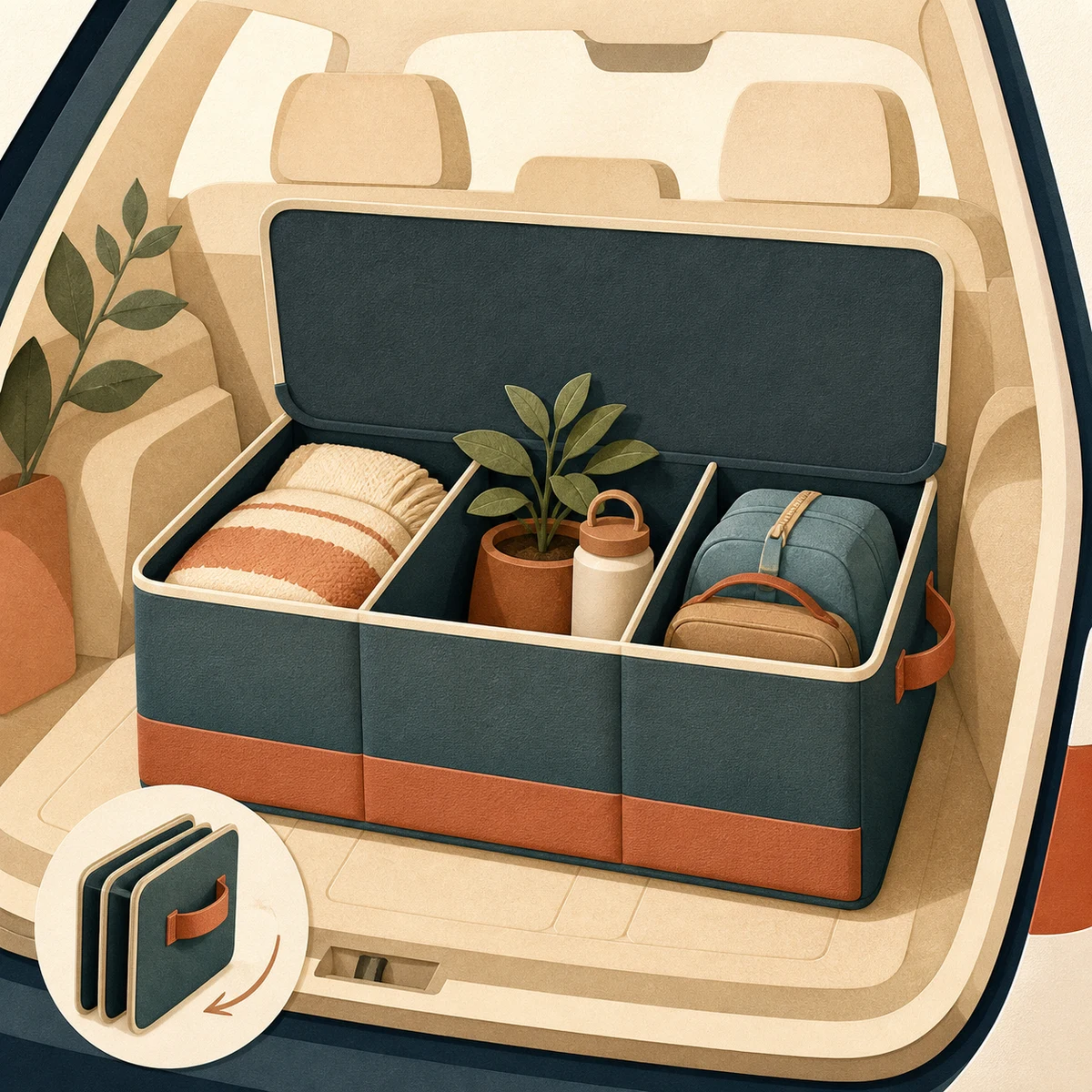
Divided compartments that fold flat when you need the whole boot.
View on Amazon
A slim wallet that keeps documents flat in the glovebox.
View on Amazon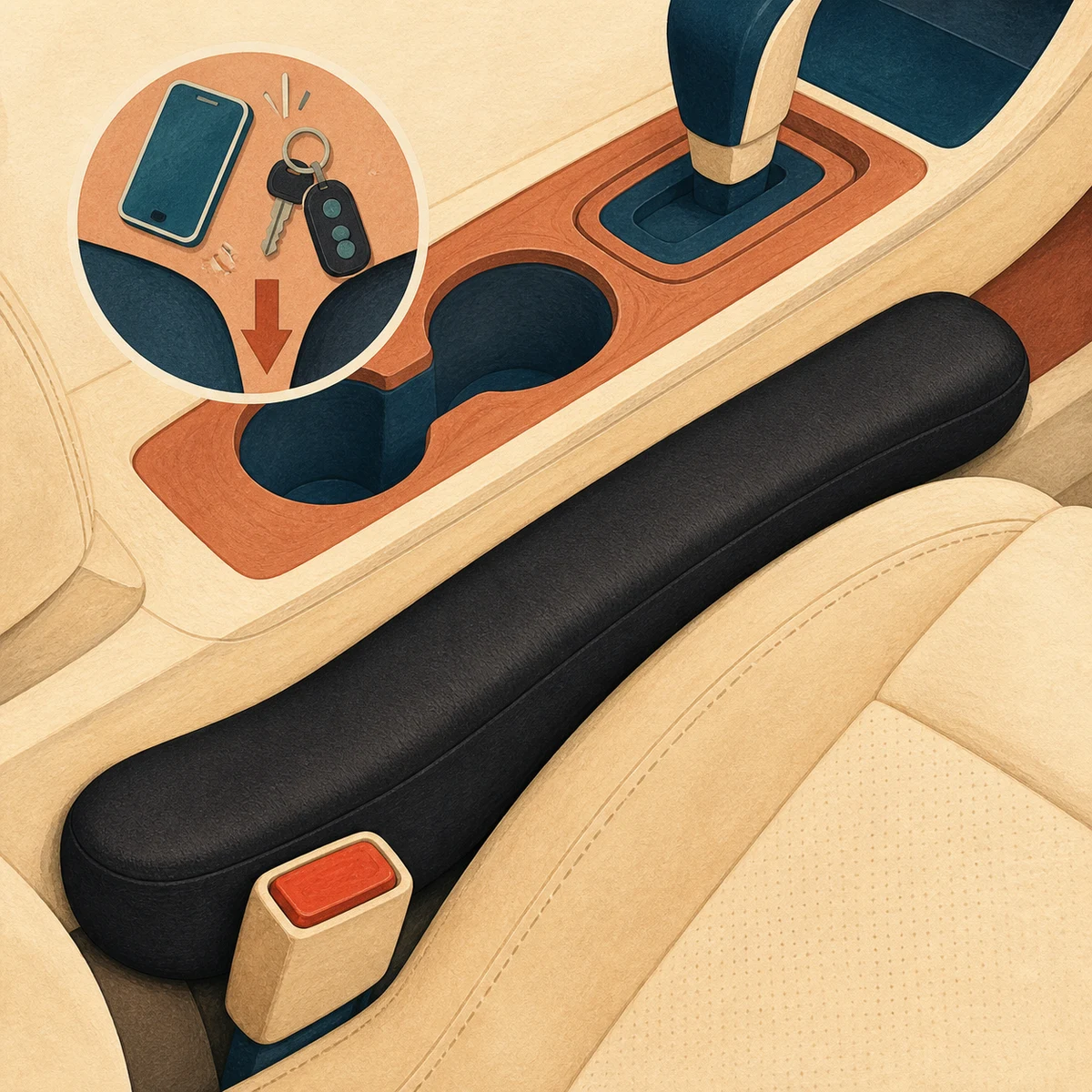
Blocks the slot where phones and coins disappear.
View on Amazon